

12 Small-Space Room Concept Strategies That Professional Designers Actually Use
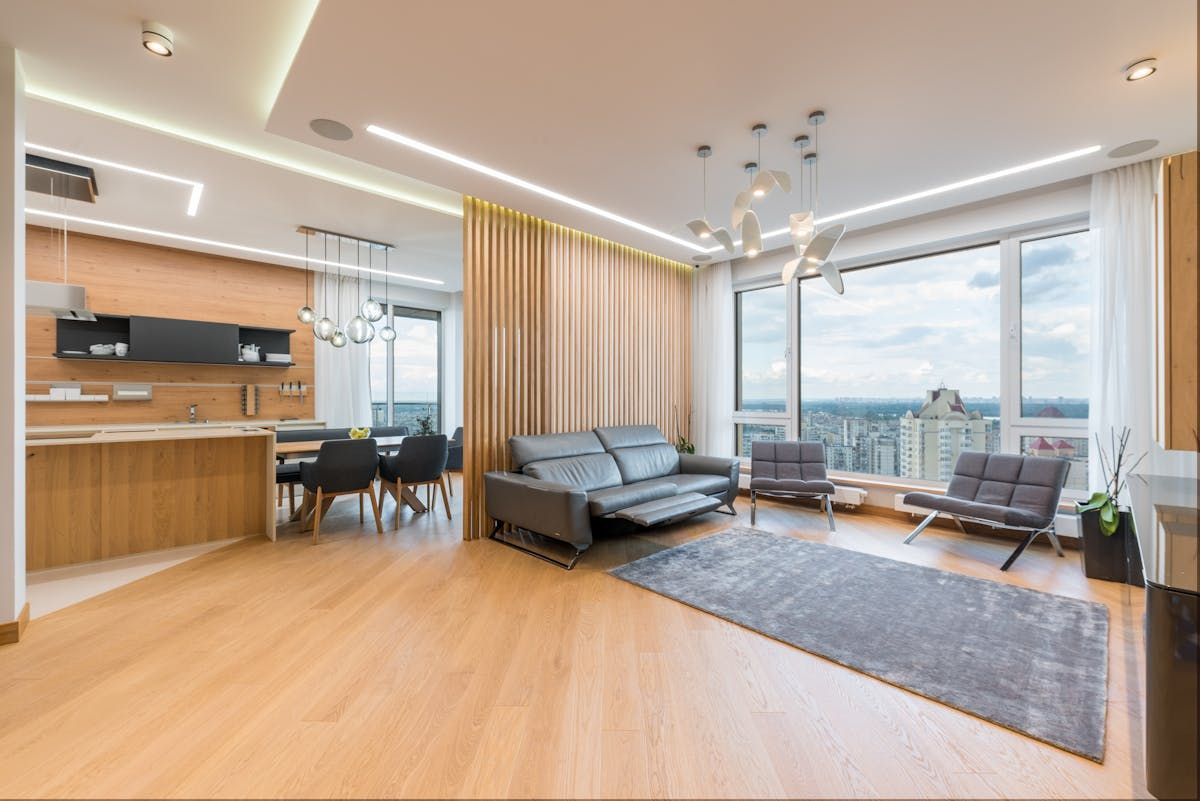
Your client just sent you the floor plan. It is a 42-square-metre apartment in Berlin-Mitte, and they want a living room, a home office, a proper kitchen, and — somehow — enough storage for two people. You stare at the dimensions and wonder where to even begin.
If this scenario sounds familiar, you are not alone. Average apartment sizes across Europe are shrinking while expectations keep growing. New builds in Amsterdam average just 39 sqm. Paris studios hover around 25-30 sqm. Even in Munich, where rents already exceed EUR 20 per square metre, the typical flat measures only 78 sqm. Every square centimetre has to earn its place.
The good news? Professional small-space room concept strategies can make these compact homes feel dramatically larger — and function far better — than most clients expect. In this guide, you will find 12 pro-level strategies that go well beyond the usual "paint it white and add a mirror" advice, including neuroarchitecture research, specific product recommendations from European retailers, and techniques that can increase perceived room size by 20-30%.
Strategy 1: Start With a Professional Floor Plan Analysis
Before you choose a single piece of furniture, measure everything and create a to-scale floor plan. This sounds basic, but it is the step most DIY decorators skip — and the step that separates professional results from amateur ones.
Why millimetre precision matters in small spaces
In a 60 sqm apartment, a sofa that is 15 cm too deep can block a doorway. A dining table that is 10 cm too wide can make a kitchen passage impassable. At this scale, there is no margin for "close enough."
- Measure every wall, alcove, window recess, and radiator — include door swing arcs and window opening clearances
- Note ceiling heights — anything above 2.50 m is vertical space you can exploit
- Map all electrical outlets and plumbing points — these constrain furniture placement more than aesthetics do
- Create a to-scale digital plan using Planner5D, RoomSketcher, or the free IKEA Home Planner
A professional floor plan analysis for a small apartment typically costs EUR 650-1,200 per room when done by a certified interior designer. That investment pays for itself by preventing expensive furniture returns and renovation mistakes.
Strategy 2: Vertical Zoning — Use Every Centimetre of Height
Most people furnish horizontally. In small spaces, the real opportunity is vertical. A room with 2.60 m ceilings has roughly 40% more usable volume than what the floor plan suggests — if you design upwards.
Practical vertical solutions
- Floor-to-ceiling bookshelves — The IKEA BILLY system (from EUR 49 per unit at IKEA.de) with the OXBERG height extension reaches 237 cm and adds storage without consuming additional floor area
- Loft beds for studios — Companies like Home24 offer loft bed frames (EUR 350-700) that free up 4-6 sqm of floor space underneath for a desk or sofa
- Wall-mounted storage — The IKEA SKADIS pegboard system (from EUR 17) or the Westwing curated wall shelf collections keep surfaces clear
- Tall, narrow cabinets — A 40 cm-wide, 200 cm-tall cabinet stores as much as a 120 cm-wide, 80 cm-tall sideboard — and uses one-third of the floor space
The golden rule of vertical design
Keep heavy, dark items below eye level and lighter, airier pieces above. This maintains visual balance while maximising storage capacity.
Strategy 3: Multifunctional Furniture That Actually Works
"Multifunctional furniture" is a phrase that gets thrown around constantly, but most of it is gimmicky. Professional designers know which pieces genuinely earn their double duty.
The multi-purpose pieces worth investing in
- Sofa beds with real mattresses — The Westwing curated collection includes sofa beds from EUR 599 that use pocket-spring mattresses rather than thin foam pads. For budget options, the IKEA FRIHETEN (around EUR 449) converts in seconds and includes hidden storage
- Expandable dining tables — The IKEA NORDEN gateleg table (EUR 169) seats two daily and six for dinner parties, folding to just 26 cm depth. For a more premium option, Kave Home's OQUI extendable table (EUR 499-699) goes from 120 cm to 200 cm
- Storage ottomans — A single ottoman from Westwing (EUR 129-249) replaces a coffee table, provides seating, and hides blankets, magazines, or toys
- Wall-mounted drop-leaf desks — Perfect for the home office that needs to disappear. Available from EUR 89 at IKEA (NORBERG) or from EUR 199 for more polished versions at Home24
Spending hours searching for the right convertible furniture across IKEA, Westwing, Home24, and a dozen other retailers? ArcOps is building a single search that aggregates products across 50+ European shops — so you can filter by exact dimensions, price range, and delivery country. Join the waitlist to search smarter.
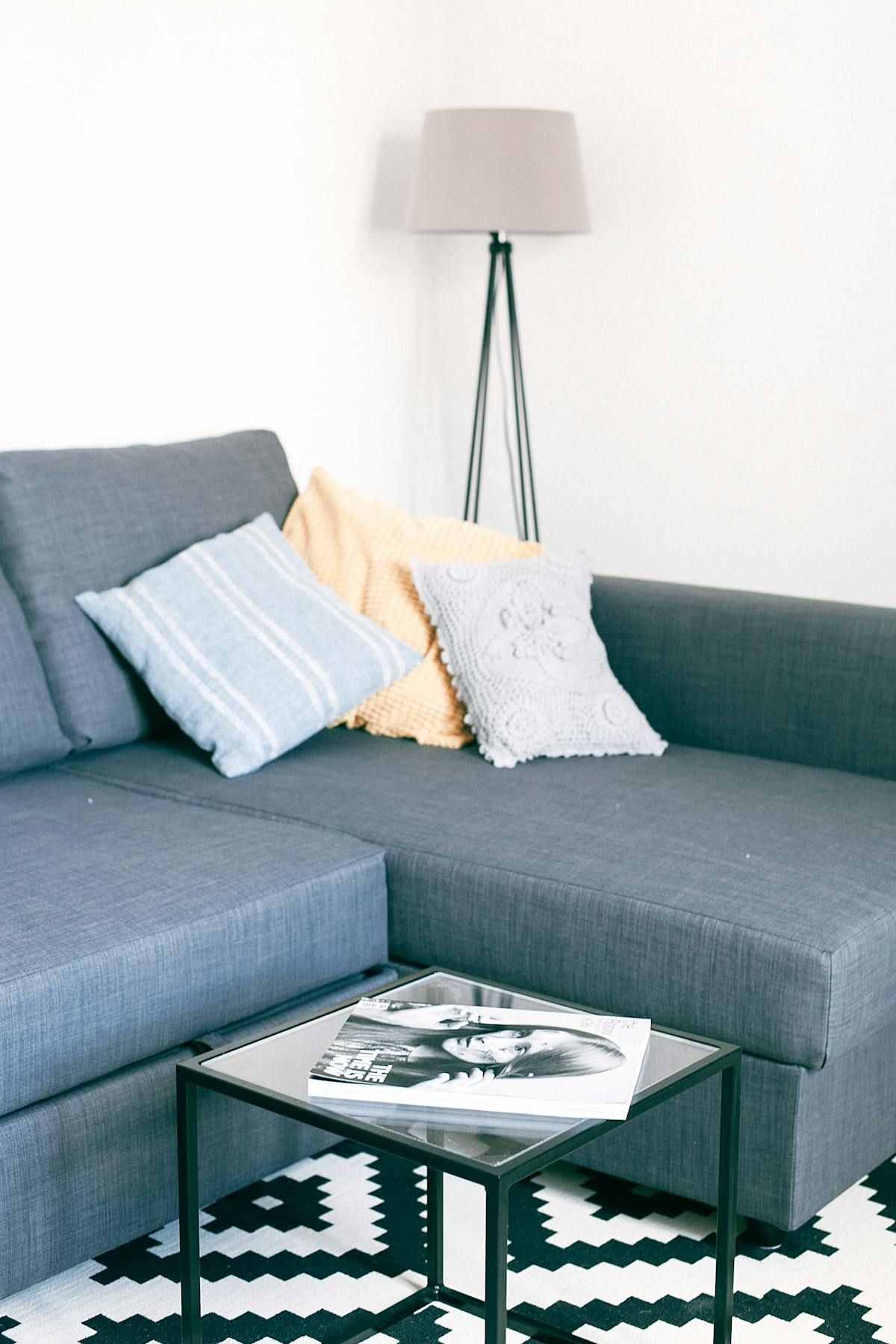
Strategy 4: The Colour Concept That Makes Rooms Feel Larger
Colour is the most cost-effective tool for changing perceived room size. But "just paint it white" is lazy advice. Professional designers use the adapted 60-30-10 rule for small spaces.
The small-space colour formula
- 60% — Light base tone — Not necessarily white. Soft grey (like Farrow & Ball's "Purbeck Stone"), warm linen, or pale sage green all work. The key is high light reflectance value (LRV above 70)
- 30% — Mid-tone accent — Applied to a single feature wall, larger furniture, or curtains. Choose a colour within the same temperature family as your base
- 10% — Bold accent — Cushions, art, decorative objects. This is where personality lives
Why warm whites outperform cool whites in compact rooms
Research in environmental psychology shows that warm-toned spaces feel more spacious than cool-toned ones of identical size. A warm white (with yellow or pink undertones) invites the eye to rest, while a cold blue-white can feel clinical and confining in a small room.
- Avoid painting a small room in a dark colour on all four walls — but a single dark accent wall can actually add depth by creating the illusion of the wall receding
- Match skirting boards, door frames, and walls in the same tone to erase visual boundaries
Strategy 5: Strategic Mirrors and Multi-Layered Lighting
Mirrors and lighting are the optical engineering of interior design. Used strategically, they can make a 35 sqm apartment feel like 50 sqm.
Mirror placement that actually works
- Place mirrors opposite windows — This effectively doubles the natural light entering the room
- Use a single large mirror rather than several small ones — One 120 cm mirror from Maisons du Monde (from EUR 79) creates a cleaner illusion than a gallery wall of small mirrors, which fragments the reflection
- Lean a floor mirror against a wall to create a sense of depth at the end of a narrow hallway
- Mirror-fronted wardrobes — The IKEA PAX system with AULI mirror doors (from EUR 80 per door panel) combines storage with spatial illusion
The three-layer lighting strategy
- Ambient layer — Ceiling-mounted or recessed lights that wash the room evenly. Avoid single-point ceiling pendants, which cast harsh shadows that shrink the perceived space
- Task layer — Desk lamps, reading lights, under-cabinet kitchen lighting. Wall-mounted options from Flos or Artemide (EUR 150-400) save precious surface area
- Accent layer — LED strip lighting under shelves, behind headboards, or along kickboards. Warm white (2700-3000K) creates depth and warmth
Strategy 6: Open Concepts vs. Flexible Room Dividers
Knocking down every wall is not always the answer. In many European apartments — especially pre-war buildings in Berlin, Vienna, or Budapest — load-bearing walls and heritage protections limit structural changes.
When to open up
- The kitchen-living transition (most impactful in apartments under 50 sqm)
- Connecting a hallway to the living area to reclaim dead corridor space
- Removing a wall between a tiny bedroom and a tiny living room to create one functional multi-use space
Smart dividers that do not waste space
- Glass partition walls — Let light flow while creating acoustic separation. Available from EUR 300-800 per panel from Leroy Merlin or specialist suppliers
- Open bookshelves as room dividers — The IKEA KALLAX (EUR 69 for 2x4) lets light pass through while defining zones
- Curtain dividers on ceiling tracks — Cost as little as EUR 30-50 from JYSK and can be pulled aside completely when not needed
- Sliding barn doors — Save the 0.8 sqm that a swinging door arc consumes. Available from EUR 199 at Agata Meble (Poland) or from EUR 249 at Leroy Merlin
Strategy 7: Small Kitchen Planning That Maximises Every Surface
Kitchens under 8 sqm are the norm in European urban apartments. A galley layout (two parallel counters) or an L-shaped layout (two adjacent walls) are your most space-efficient options.
Professional kitchen tricks for compact spaces
- Extend the countertop over appliances — A custom countertop that flows over a washing machine or dishwasher gains 60 cm of prep surface
- Use the inside of cabinet doors — Mount spice racks, lid organisers, or cutting board holders on the interior of upper cabinet doors
- Magnetic knife strips and wall-mounted rail systems — Free up drawer space entirely. Available from EUR 12 (IKEA KUNGSFORS) to EUR 45 (premium options at Home24)
- Corner carousel systems — Reclaim the dead space in L-shaped kitchens. A LeMans corner pull-out system (EUR 150-250 installed) turns unusable corner cabinets into fully accessible storage
- Fold-down breakfast bars — A wall-mounted drop-down bar serves as prep surface and dining area. Available from EUR 79 at IKEA (NORBERG wall-mounted drop-leaf table)
Strategy 8: Bathrooms Under 5 sqm — Professional Space Utilisation
Small bathrooms require the most precise spatial planning of any room. Every centimetre counts.
The essential small-bathroom playbook
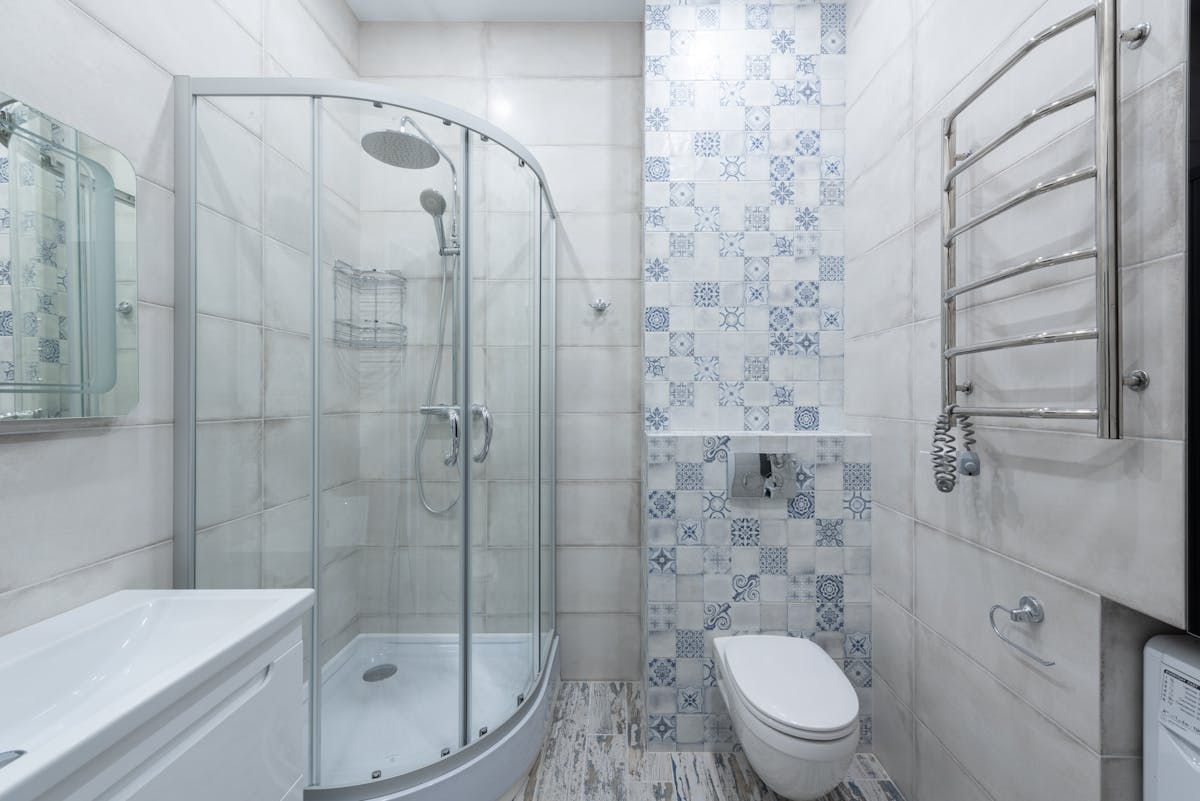
- Wall-mounted toilets and vanities — Exposing floor area makes the room feel significantly larger. Wall-mounted vanities start from EUR 199 at Leroy Merlin or Dedeman
- Walk-in shower with glass panel instead of a shower curtain or framed enclosure — eliminates visual barriers
- Large-format tiles (60x60 cm or larger) — Fewer grout lines means fewer visual interruptions, which makes the space read as larger. Available from EUR 25/sqm at Leroy Merlin
- Recessed shelving (niches) — Built into the shower wall during renovation, these add storage without protruding into the room
- Full-height mirrors above the vanity — Extend the mirror from counter to ceiling rather than using a standard 60 cm mirror cabinet
Searching for wall-mounted vanities that fit your exact 38 cm depth requirement? ArcOps lets you filter by precise dimensions across Leroy Merlin, Dedeman, IKEA, and dozens more European retailers — no more opening 12 browser tabs. Get early access.
Strategy 9: Home Office in a Niche — Workspace That Disappears
Since 2020, the home office has become non-negotiable in European apartments. But dedicating an entire room to work is a luxury most small-space dwellers cannot afford.
Where to find hidden workspace potential
- Inside a wardrobe — A 120 cm-wide wardrobe can house a desk surface, monitor, and shelving. When work is done, close the doors and the office vanishes
- Under a loft bed — The space beneath a loft bed comfortably fits a 120x60 cm desk and shelving
- In a hallway alcove — Even a 70 cm-deep alcove can accommodate a wall-mounted desk and a task chair
- On a landing or wide windowsill — A 45 cm-deep shelf at sitting height plus good lighting creates a functional micro-office
Essential ergonomics for micro-offices
- Minimum desk width: 80 cm (100 cm preferred)
- Monitor distance: 50-70 cm from eyes
- Task lighting: 500 lux minimum at the work surface — a clip-on LED lamp from IKEA (TERTIAL, EUR 12) or a premium option from Flos (EUR 200+) works in tight spots
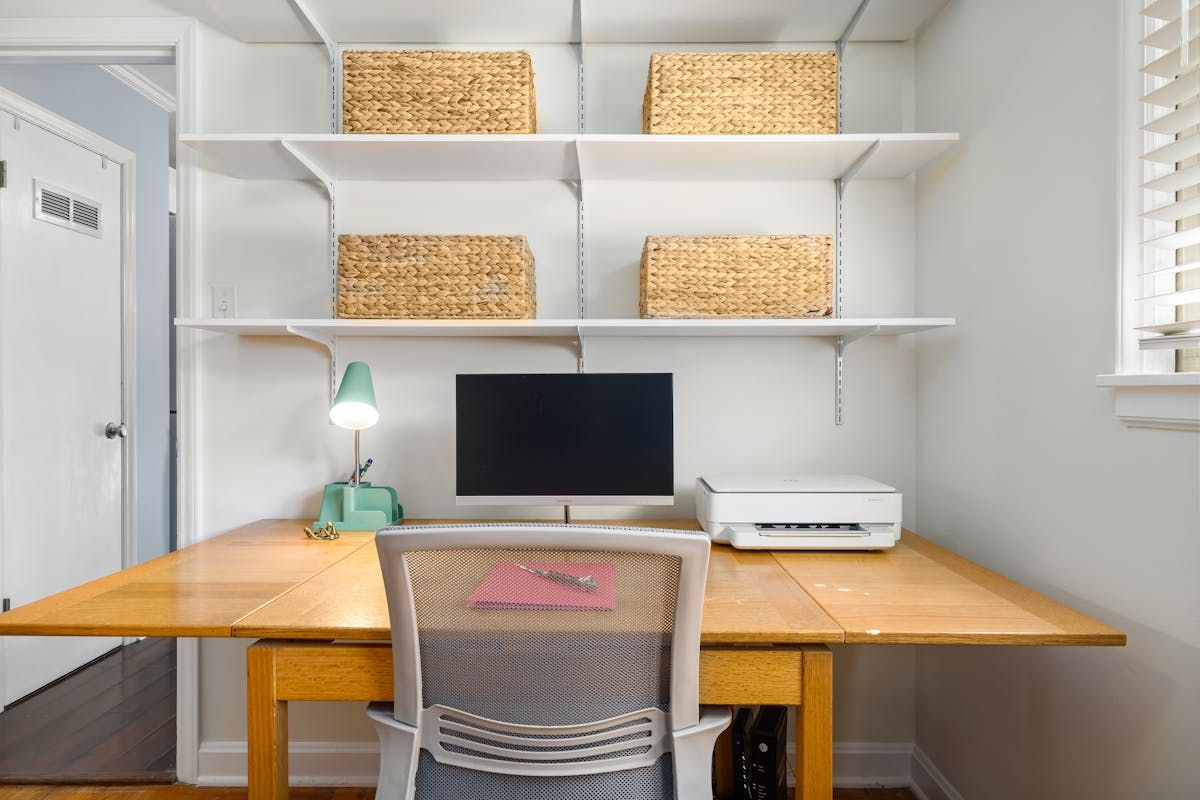
Strategy 10: The Storage Audit — Hidden Capacity Most People Miss
Before buying any new storage furniture, audit what you already have. Most small apartments contain 15-25% more usable storage than their owners realise.
The overlooked storage opportunities
- Above door frames — A shelf above each door adds 40-60 cm of storage depth across the full width of the doorway
- Under the bed — Even standard bed frames accommodate 15-20 cm of under-bed storage. IKEA's MALM bed (from EUR 249) comes with four built-in drawers
- On top of kitchen cabinets — The gap between upper cabinets and the ceiling is wasted space. Add uniform baskets or boxes for rarely used items
- Inside stairwells — In duplexes or maisonettes, custom pull-out drawers under stairs can add 2-4 cubic metres of storage
- Vertical door-back organisers — Hang shoe racks, cleaning supply holders, or jewellery organisers on the back of doors
Strategy 11: Smart Home Technology That Reduces Furniture Needs
Smart home technology is not just about convenience — in small spaces, it physically eliminates the need for certain furniture.
Technology that replaces furniture
- A projector replaces a TV and TV stand — Wall-mounted mini projectors (from EUR 299) eliminate the need for a TV console, freeing 0.5-1 sqm of floor space
- Wireless speakers replace speaker stands — Wall-mounted Sonos or IKEA SYMFONISK speakers (from EUR 99) deliver quality audio without consuming floor or shelf space
- Smart lighting eliminates floor and table lamps — Philips Hue or IKEA TRADFRI smart bulbs in ceiling fixtures can adjust colour temperature and brightness, removing the need for multiple standalone lamps
- Voice-controlled everything — When your lights, blinds, and music are voice-controlled, you need fewer physical switches, remote controls, and control surfaces
Strategy 12: Neuroarchitecture — The Science of Perceived Room Size
This is where professional design separates itself from Pinterest advice. Neuroarchitecture — the study of how architectural environments affect the brain — offers evidence-based techniques for making rooms feel larger.
Research-backed spatial perception tricks
- Horizontal lines elongate, vertical lines heighten — Horizontal-stripe wallpaper or long, low furniture makes a room feel wider. Vertical stripes or floor-to-ceiling curtains make ceilings feel higher. Research from the University of Liverpool's neuroarchitecture group confirms that perceived room dimensions can shift by 20-30% based on line direction alone
- Continuous flooring eliminates room boundaries — Using the same flooring material throughout an apartment (without threshold strips) makes the brain perceive one large space rather than several small ones
- Sight lines matter more than square metres — If you can see from the front door through to a window at the far end of the apartment, the brain registers the full diagonal distance as the "room size." Never block these sight lines with tall furniture
- Curved furniture softens spatial perception — Rounded sofas, oval dining tables, and arched mirrors reduce the visual "collision" between furniture and walls, making tight layouts feel less cramped. Curved furniture options are trending in 2026 collections from HAY, Muuto, and Kartell
- Biophilic elements expand perceived space — Plants and natural materials trigger a neurological relaxation response that reduces spatial anxiety. Even two or three well-placed plants can make a compact room feel more comfortable
The challenge for designers working on small-space projects is sourcing very specific products — a sofa bed that is exactly 140 cm wide, a shelving unit that fits a 38 cm alcove, a round dining table that seats four within 90 cm diameter. ArcOps is building dimension-filtered search across Europe's top retailers so you can find precisely what you need in minutes, not hours. Reserve your founding member spot.
Key Takeaways
- Measure first, furnish second — A professional to-scale floor plan is the foundation of every successful small-space room concept, saving EUR hundreds in avoided mistakes
- Think vertically — Floor-to-ceiling solutions (shelving, loft beds, wall-mounted storage) unlock 30-40% more usable space than horizontal furniture alone
- Invest in genuinely multifunctional pieces — Sofa beds with real mattresses, gateleg tables, and storage ottomans earn their space twice over
- Use the adapted 60-30-10 colour rule — Warm light tones for 60% of surfaces, mid-tones for 30%, bold accents for 10%
- Mirrors opposite windows and three-layer lighting double the perceived brightness and depth of any room
- Audit before you buy — Most apartments have 15-25% more hidden storage potential than owners realise
- Apply neuroarchitecture principles — Continuous flooring, maintained sight lines, and curved furniture can increase perceived room size by 20-30%
- Smart home tech physically eliminates furniture — Projectors replace TV stands, wireless speakers replace shelf-hogging units
Frequently Asked Questions
How much does a professional small-space room concept cost?
A professional room concept for a small apartment typically costs EUR 650-1,200 per room from a certified interior designer. This usually includes a floor plan analysis, furniture layout, colour scheme, and a sourcing list. For a complete 45-60 sqm apartment, expect EUR 2,000-4,500 depending on the designer's experience and your location. Designers in Munich or Paris tend to charge at the higher end, while equally qualified professionals in Bucharest or Warsaw often charge 30-50% less.
What is the minimum room size for a functional living room?
A functional living room needs a minimum of 12-14 sqm to accommodate a sofa, coffee table, and media setup. However, with multifunctional furniture (a sofa bed, a nesting coffee table, a wall-mounted TV), you can create a comfortable living space in as little as 9-10 sqm. The key is ensuring at least 70 cm of clear passage around seated areas.
Which colours make a small room look bigger?
Light, warm-toned neutrals with a light reflectance value (LRV) above 70 are most effective. Specifically: warm whites, pale sage green, soft linen, and light warm grey. Avoid pure brilliant white — it can feel sterile in small rooms. A single darker accent wall (in navy, forest green, or charcoal) can paradoxically add depth by making that wall appear to recede.
How do I create zones in a studio apartment without walls?
The most effective zoning techniques for studios are: different flooring materials or rugs to define areas (a rug under the living zone, tile in the kitchen zone); changes in lighting temperature (warm 2700K for living, cool 4000K for work); open shelving units as visual dividers that maintain light flow; and ceiling-mounted curtain tracks that allow flexible separation when needed.
Can neuroarchitecture really make a room feel 30% larger?
Yes. Research from multiple institutions, including the University of Liverpool's neuroarchitecture group, demonstrates that design choices can alter perceived room dimensions by 20-30%. The most impactful techniques are: maintaining clear sight lines from entry to far window, using continuous flooring throughout the apartment, incorporating horizontal line patterns to widen perceived width, and placing mirrors to double visible depth. These are not subjective feelings — they are measurable perceptual shifts documented in controlled studies.