

How to Markup Products as an Interior Designer: The European Pricing Guide

You've just spent three hours sourcing the perfect linen curtains for a client's bedroom, comparing swatches from Westwing, JYSK, and a small Romanian textile supplier. You've coordinated delivery timelines, negotiated bulk pricing, and created a detailed specification document. Now comes the uncomfortable part: deciding what to charge. Do you add 20%? 40%? And how do you explain that number without sounding like you're simply inflating prices?
Product markup is where most freelance designers leave money on the table. Not because you're bad at maths, but because no one teaches you the business logic behind it. You're not just reselling furniture—you're providing curation expertise, quality assurance, time savings, and project coordination. That value deserves compensation, but pricing it fairly (for both you and your client) requires a systematic approach.
This guide walks you through the exact markup percentages European designers use by product category, how to calculate them consistently across currencies, and how to use price comparison strategically to increase your effective margins without raising client costs.
What Markup Is (And Why It's Not Unethical)

Markup is the percentage you add to the wholesale or retail price of a product to cover your time, expertise, and business costs. If you source a sofa for €800 and charge your client €1,120, you've applied a 40% markup (€320 profit).
Here's what that markup actually pays for. You've researched dozens of options to find the right piece. You've verified dimensions, checked lead times, read reviews, and possibly visited showrooms. You've coordinated with suppliers, managed delivery logistics, and handled any issues that arise. You're also providing a curated selection—saving your client from decision paralysis and costly mistakes.
When Elena buys a dining table from IKEA herself, she gets the table. When you source it for her, she gets the table plus your professional judgement that it's the right size, style, and quality for her space and budget. That's the difference between a transaction and a service.
Markup is standard practice across all professional services. Architects mark up contractor fees. Event planners mark up venue rentals. Lawyers mark up filing fees. The markup model compensates you for specialised knowledge and project management work that would otherwise go unpaid.
Standard Markup Ranges by Product Category

Not all products deserve the same markup. The percentage should reflect the time investment, coordination complexity, and expertise required for each category.
Furniture typically commands 25-40% markup. Large pieces require significant coordination (delivery scheduling, assembly, damage inspection), but clients can easily price-check them online. A 30% markup on a €2,000 Westwing sofa (€600 profit) fairly compensates you for specification work and logistics management.
Textiles and soft furnishings sit at 30-50%. Curtains, bedding, and upholstery fabrics are harder for clients to source independently because they require precise measurements, fabric knowledge, and supplier relationships. You're more likely to be sourcing from trade-only suppliers where comparison shopping is impossible.
Lighting fixtures fall in the 20-35% range. Electrical coordination and installation oversight justify a solid markup, but high-end lighting brands (Flos, Artemide) often have published retail pricing that limits your flexibility. A 25% markup on a €400 pendant light (€100 profit) is reasonable and defensible.
Accessories and décor allow 40-60% markup. Small items (cushions, vases, artwork) require disproportionate sourcing time relative to their cost. A €30 cushion from Dedeman that takes 20 minutes to select deserves a 50% markup (€15 profit) because you're selling curation, not just the object.
Here's how these ranges compare across categories:
| Product Category | Typical Markup Range | Example: €1,000 Item | Your Profit |
| Furniture (sofas, tables, beds) | 25-40% | €1,250-€1,400 | €250-€400 |
| Textiles (curtains, bedding, upholstery) | 30-50% | €1,300-€1,500 | €300-€500 |
| Lighting (pendants, floor lamps) | 20-35% | €1,200-€1,350 | €200-€350 |
| Accessories (cushions, vases, art) | 40-60% | €1,400-€1,600 | €400-€600 |
| Custom/bespoke pieces | 35-50% | €1,350-€1,500 | €350-€500 |
These are starting points, not rules. Your actual markup depends on your local market, client expectations, and the complexity of the specific project. A straightforward IKEA order might warrant 20%, while a custom upholstery project with multiple supplier touchpoints could justify 50%.
How to Calculate Markup Consistently

Consistent markup calculation prevents pricing errors that erode profit margins. The formula is simple, but applying it correctly across different purchase scenarios requires discipline.
The basic markup formula: Client Price = Cost × (1 + Markup Percentage)
If you buy a chair for €200 and want a 30% markup:
- €200 × 1.30 = €260 client price
- Your profit: €60
Don't confuse markup with margin. Markup is calculated on your cost; margin is calculated on the selling price. A 30% markup (€200 cost → €260 sale) equals a 23% margin (€60 profit ÷ €260 sale). They're measuring the same profit from different angles, but the numbers aren't interchangeable.
Let's walk through a realistic product specification:
Example 1: IKEA PÄRUP 3-seat sofa
- IKEA retail price (Germany): €799
- Your markup strategy: 25% (lower because client could easily price-check)
- Client price: €799 × 1.25 = €998.75 (round to €999)
- Your profit: €200
Example 2: Westwing velvet curtains (custom length)
- Supplier cost: €180 per panel (2 panels needed)
- Total cost: €360
- Your markup strategy: 40% (higher because custom sizing and fabric expertise)
- Client price: €360 × 1.40 = €504
- Your profit: €144
Example 3: Dedeman decorative cushion set
- Retail price for 4 cushions: €80
- Your markup strategy: 50% (high because small items require disproportionate curation time)
- Client price: €80 × 1.50 = €120
- Your profit: €40
Track your cost basis carefully. If you're buying at retail (IKEA, JYSK), your cost is the published price. If you're buying from a trade supplier, your cost is the wholesale price they quote you. If you're sourcing internationally, your cost includes shipping and any customs fees.
The Multi-Currency Markup Trap (And How to Avoid It)

Here's where European designers lose money: you source a product in Romanian lei (RON), mentally calculate a 30% markup, then send an invoice in euros (EUR) without accounting for exchange rate fluctuations. Two weeks later, when you actually pay the supplier, the exchange rate has shifted and your profit margin has disappeared.
The problem is timing. You quote a client in EUR on Monday when €1 = 4.95 RON. You invoice them immediately. But you don't pay the Romanian supplier until the products arrive three weeks later, when €1 = 4.88 RON. That 1.4% currency shift just ate into your markup.
Let's work through a real scenario:
Day 1: Product selection
- Romanian lighting supplier quotes 990 RON per pendant
- Exchange rate: €1 = 4.95 RON
- Converted cost: 990 ÷ 4.95 = €200
- You apply 30% markup: €200 × 1.30 = €260
- Client invoice: €260
Day 21: Payment due
- Exchange rate has shifted: €1 = 4.88 RON
- Actual EUR cost to pay supplier: 990 ÷ 4.88 = €202.87
- Your actual profit: €260 - €202.87 = €57.13
- Intended profit was: €60
- You've lost 4.8% of your margin to currency fluctuation.
Three strategies to protect your margins:
- Add a currency buffer. When quoting cross-border purchases, apply your standard markup plus a 3-5% currency buffer. For the example above, quote €268 (30% markup + 3% buffer) instead of €260.
- Lock in exchange rates. Use a business currency service (Wise, Revolut Business) that lets you lock an exchange rate when you quote the client. You'll pay a small fee (typically 0.5-1%), but it's cheaper than losing margin to volatility.
- Bill in the source currency. If your client is comfortable with it, invoice them in RON for Romanian-sourced items and in EUR for German-sourced items. This shifts currency risk to the client, who pays the exact amount needed at the time of their payment.
ArcOps handles multi-currency markup automatically. When you're sourcing products from suppliers across Romania, Germany, France, and beyond, the platform converts everything to your preferred invoicing currency and applies your target markup percentage consistently, flagging any exchange rate shifts before you send client quotes. Learn more about our pricing strategies guide for European designers.
The Price Comparison Advantage: Sourcing Strategically Across Borders
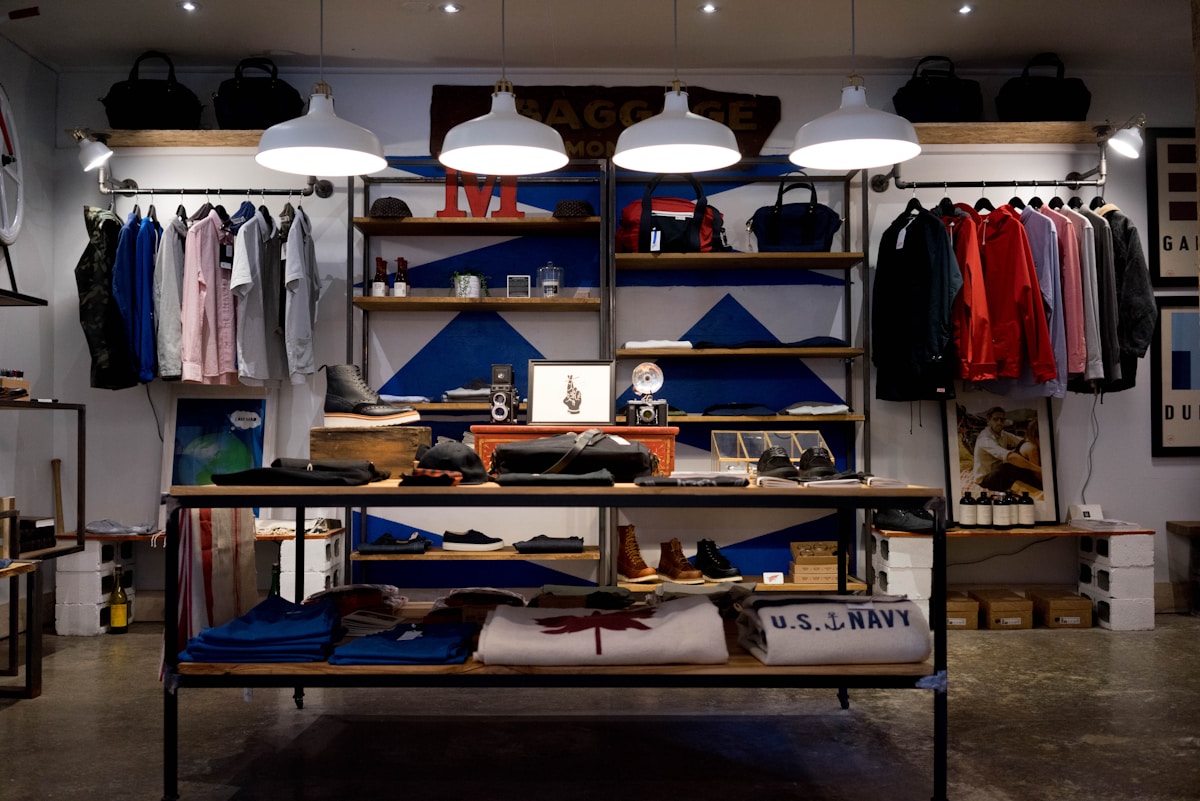
Here's a strategy most designers never consider: the same product often costs different amounts in different European countries. IKEA, JYSK, and Westwing all adjust pricing based on local purchasing power and logistics costs. If you're willing to compare prices across their regional websites, you can source the identical item at a lower cost and increase your effective markup without raising your client price.
Let's look at a real example using the IKEA BILLY bookcase (the 80×28×202cm version, white):
| IKEA Website | Local Price | Converted to EUR | Your Cost (incl. shipping) |
| IKEA Romania (.ro) | 399 RON | €80.60 | €95 |
| IKEA Germany (.de) | €89 | €89 | €95 |
| IKEA France (.fr) | €99 | €99 | €105 |
| IKEA Spain (.es) | €95 | €95 | €100 |
If you're working on a project in Bucharest and you quote your client €130 for the BILLY bookcase (based on IKEA Romania pricing plus 30% markup), you'd make €35 profit.
But if you source the same bookcase from IKEA Romania at 399 RON (€80.60) instead of assuming you have to buy from Germany, your cost drops to €95 after shipping, and your profit increases to €35. Now, what if you maintain your €130 client price but find it even cheaper?
Actually, let's reconsider this realistically: If you identify that IKEA Romania offers the best base price, you reduce your cost basis. If your client quote was already based on the German price (€89) with 30% markup (€115.70), but you source from Romania (€80.60), you've just increased your effective markup to 43% without changing what the client pays.
This strategy works for any product sold across multiple European retailers. JYSK sells the same CLOUD duvet in Denmark, Romania, Germany, and Poland at different prices. Westwing's pricing varies between .de, .fr, and .nl. Even trade suppliers quote differently depending on which country's sales office you contact.
The time investment is minimal: open three browser tabs, compare prices, calculate shipping, and choose the best source. For a €3,000 furniture order, saving €150 on your cost basis translates directly to €150 additional profit.
ArcOps price comparison tool automates this process. Instead of manually checking IKEA.ro, IKEA.de, and IKEA.fr, you search once and see all regional prices side-by-side with shipping estimates, letting you source strategically in seconds. Explore our complete product sourcing guide.
Communicating Markup to Clients

The hardest part of markup isn't calculating it—it's explaining it. You need a communication strategy that positions markup as professional compensation, not price inflation.
Transparency works well with design-savvy clients. If Elena understands the interior design process, she'll appreciate a straightforward explanation: "I charge a 30% product markup to cover sourcing time, supplier coordination, quality verification, and delivery management. This is standard practice across the industry and ensures I'm compensated fairly for the expertise I bring to product selection."
Most clients accept this immediately, especially if you frame it as the alternative to hourly billing. A 30% markup on €5,000 of furniture (€1,500 profit) is often less than you'd earn billing 15 hours at €100/hour, and it feels less transactional to the client.
Bundled pricing works better for price-sensitive clients. Instead of showing product cost + markup separately, present a single line item: "Living room furniture package: €6,500 (includes all sourcing, coordination, and delivery management)." The client sees one number and doesn't think about cost breakdowns.
This approach is particularly effective when you're mixing retail purchases (IKEA) with custom orders (upholstery). Bundling prevents the client from mentally comparing your IKEA pricing to what they'd pay directly, because they're buying a complete service, not individual products.
Never apologise for markup. The moment you say "I'm sorry, but I do need to add a markup" or "It's just a small markup," you've positioned it as an unfortunate necessity rather than fair compensation. Instead, use confident language: "My product fee covers the curation and coordination work that ensures everything arrives on time, fits perfectly, and meets quality standards."
What about clients who push back? If someone questions your markup, you have three options:
- Explain the value. Walk them through exactly what the markup pays for: hours of research, supplier vetting, measurement verification, delivery scheduling, damage inspection, returns management. Most clients don't realise how much invisible work goes into "just ordering a sofa."
- Offer an alternative pricing model. "If you'd prefer, I can work hourly for product sourcing at €85/hour with no markup. Based on this project's scope, I estimate 12 hours of sourcing work, so €1,020 total. The markup approach would be €780. Which feels more comfortable to you?"
- Decline the project. If a client fundamentally doesn't value your sourcing expertise, they're not your ideal client. You'll spend the entire project defending your pricing instead of designing. It's better to walk away and invest your time in clients who appreciate your work.
Document your markup policy clearly in your service agreement. Include a sentence like: "Product pricing includes a [X]% professional markup to compensate the designer for curation, coordination, and project management services. This is standard industry practice." This sets expectations upfront and prevents surprises later.
Key Takeaways
- Markup compensates you for curation, coordination, and expertise—not just product resale. It's ethical and standard across professional services.
- Use category-specific markup ranges: 25-40% for furniture, 30-50% for textiles, 20-35% for lighting, 40-60% for accessories. Adjust based on project complexity.
- Calculate consistently: Client Price = Cost × (1 + Markup Percentage). Track your true cost basis including shipping and customs.
- Protect margins in multi-currency scenarios by adding a 3-5% currency buffer, locking exchange rates, or billing in the source currency.
- Compare prices across European retailers (IKEA.ro vs. IKEA.de vs. IKEA.fr) to reduce your cost basis and increase effective markup without raising client prices.
- Choose transparency or bundling based on your client's sophistication. Never apologise for markup—position it as professional compensation.
- Document your markup policy in service agreements to set clear expectations and avoid mid-project pricing disputes.
Frequently Asked Questions
Should I markup IKEA purchases the same as custom furniture?
No. IKEA pricing is publicly visible, so clients can easily compare. Use a lower markup (20-25%) for mainstream retail brands and reserve higher markups (35-50%) for trade-only suppliers, custom pieces, or products requiring significant specification work. The key is matching your markup to the expertise and coordination effort required.
How do I handle markup when a client wants to buy something themselves?
Explain that if they purchase directly, you can't guarantee fit, quality, or delivery timing, and you'll need to charge hourly for any coordination or troubleshooting work (typically at a higher effective cost). Most clients quickly realise that your markup is cheaper than the risk of mistakes or your hourly rate for fixing problems. Alternatively, offer a "procurement management fee" (flat rate per item) if they insist on buying direct.
Is it legal to mark up products without disclosing the exact percentage?
Yes, throughout the EU. You're not required to itemise your cost basis or markup percentage unless local consumer protection laws specifically mandate it (rare for B2B services). However, transparency builds trust, so many designers choose to explain their markup structure upfront in service agreements. Consult a local contracts lawyer if you're uncertain about your specific country's requirements.
What if I find a better price after I've already quoted the client?
You have three ethical options: (1) Pass the savings to the client and maintain your original margin percentage, (2) Keep your quoted price and enjoy the increased margin as a reward for good sourcing, or (3) Split the difference. Option 2 is perfectly acceptable—you quoted based on your best information at the time, and better sourcing is part of your skill set. Just don't retroactively increase prices if costs go up; absorb small overruns or explain significant changes transparently.
How do I markup products when working with a contractor who has their own supplier relationships?
If the contractor is purchasing directly from their supplier, you shouldn't mark up their cost—that's double-dipping. Instead, charge a "specification and coordination fee" (flat rate or hourly) for the time you spend selecting products, reviewing quotes, and managing communication. Alternatively, structure the project so you purchase all design-related items (furniture, lighting, textiles) and the contractor only purchases construction materials (timber, tiles, paint). This keeps roles clear and markup ethical.
Ready to streamline your product sourcing and pricing across European suppliers? ArcOps helps freelance interior designers compare prices across IKEA, Westwing, JYSK, and Dedeman, calculate multi-currency markups automatically, and generate professional client quotes in minutes. See our profit margins guide to learn how European designers are increasing margins by 15-30% with strategic sourcing.