

IKEA vs. Westwing vs. JYSK vs. Maisons du Monde: The European Furniture Retailer Guide for Interior Designers

You've spent three hours sourcing the perfect sofa for a client's €15,000 living room project, only to discover your chosen retailer doesn't deliver to their postal code, has a six-week lead time, and offers no trade discount. Meanwhile, your client is texting you photos from IKEA asking "why can't we just get this one?" It's not that IKEA is wrong—it's that you need a systematic framework for matching retailers to projects, not a panic-driven scramble through bookmarked websites.
Most interior designers build their retailer knowledge through expensive trial and error: botched deliveries, quality complaints, and awkward conversations about why that €800 dining chair doesn't look like the website photo. But Europe's furniture retail landscape is vast, fragmented, and changes by country. What works for a Berlin flat renovation won't work for a Romanian villa, and the retailer that's perfect for budget student housing will destroy your credibility on a €50,000 refurbishment.
This guide evaluates ten major European furniture retailers through the lens of professional interior design work. You'll get delivery footprints, trade programme details, quality assessments, price positioning, and honest strengths and weaknesses. By the end, you'll know exactly which retailer to open first for any project type, budget, or geography—and which ones to avoid unless you're desperate.
Why Interior Designers Need to Know Their Retailers

Your clients don't hire you to be a human search engine. They hire you because you know which products will arrive on time, look like the renders, and still function beautifully in three years. That knowledge comes from understanding retailers at a systems level: their supply chains, their quality control, their trade policies, and their delivery capabilities.
Retailer selection affects every downstream decision in your project. Choose a retailer with weak delivery infrastructure, and you'll spend hours managing logistics instead of designing. Pick one with inconsistent quality, and you'll field complaints during the snagging phase. Select a retailer above your client's budget tier, and you'll either blow the budget or waste time substituting products.
Professional designers treat retailer knowledge like material knowledge. You wouldn't specify marble without knowing its porosity, maintenance needs, and cost per square metre. Why would you source from Westwing without knowing their returns policy, trade discount structure, and delivery lead times? Retailer competence is part of your professional toolkit, not something you Google project-by-project.
The European Furniture Retail Landscape: Who's Who

IKEA (Europe-Wide)
Countries served: All EU27 + UK, Switzerland, Norway
Price tier: Budget to mid-range (€50–€1,500 per item)
Trade programme: IKEA for Business (5–15% discount, varies by country)
Delivery lead time: 1–3 weeks (stock-dependent)
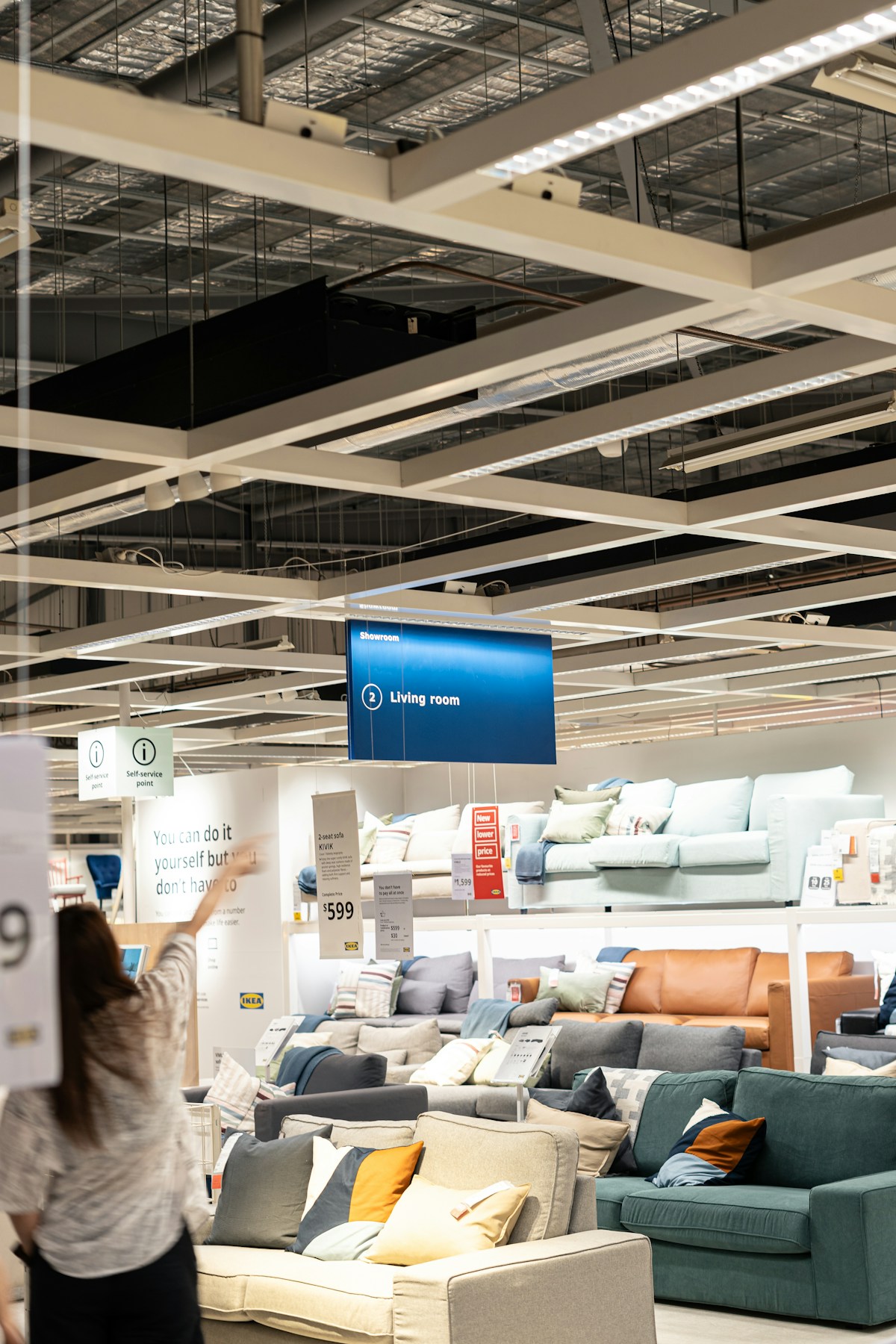
IKEA is the retailer every client knows and half of them want. They offer unmatched product breadth (9,500+ items), predictable quality, and Europe-wide availability. Their flat-pack model means affordable shipping, and their supply chain is mature enough that stock levels are reasonably reliable. For budget-conscious clients, IKEA hits the sweet spot between price, design, and functionality.
The trade programme varies wildly by country. In Germany and Sweden, you'll get 15% off with business documentation and a tax ID. In Romania and Poland, the discount drops to 5–8%, and paperwork requirements are stricter. Delivery is IKEA's weakest point: they use third-party couriers who often delay, damage, or misdeliver items, and customer service for trade accounts is no better than consumer-level support.
Best for: Budget residential projects (student housing, rental properties, starter homes), children's furniture, storage solutions, temporary staging
Avoid for: High-end residential, commercial hospitality (brand recognition works against you), custom or bespoke projects
Strengths: Price, range, availability, flat-pack efficiency
Weaknesses: Delivery reliability, quality inconsistency (especially textiles), zero customisation
JYSK (Europe-Wide)
Countries served: All EU27 + UK, Switzerland, Norway, Iceland
Price tier: Budget (€30–€800 per item)
Trade programme: JYSK Professional (10–20% discount, requires business registration)
Delivery lead time: 1–2 weeks
JYSK is Scandinavia's answer to budget bedroom and textile furnishings. They excel at mattresses, bed frames, curtains, and small storage—categories where quality-to-price ratio matters more than design flair. Their trade programme is more generous than IKEA's in most countries, and delivery is handled in-house across their core markets (Denmark, Germany, Poland, Romania).
Product design skews traditional and safe, which works for rental properties and care homes but feels dated in contemporary residential projects. Quality is hit-or-miss: their mattresses and bed linens punch above their price point, but their upholstered furniture and wooden case goods feel cheap. JYSK's strength is operational reliability—orders ship on time, stock levels are accurate, and returns are straightforward.
Best for: Rental properties, care homes, budget bedroom projects, textile and soft furnishing sourcing
Avoid for: Living rooms, statement pieces, mid-to-high-end residential
Strengths: Mattresses, textiles, delivery reliability, trade discounts
Weaknesses: Design aesthetic, upholstery quality, limited product innovation
Westwing (Germany/EU)
Countries served: Germany, Austria, Switzerland, Netherlands, Belgium, France, Spain, Italy, Poland, Czech Republic
Price tier: Mid to premium (€200–€4,000 per item)
Trade programme: Westwing Trade (15–25% discount, invitation-only, portfolio review required)
Delivery lead time: 2–6 weeks (brand-dependent)
Westwing is a curated marketplace, not a manufacturer, which means quality and delivery depend entirely on which brand you're ordering from. Their trade programme is excellent—if you can get approved. You'll need a portfolio, proof of at least three completed projects, and business registration. Once in, the discount structure is aggressive (up to 25% on premium brands), and their customer service is designer-focused.
The product selection leans contemporary-luxe: velvet sofas, brass lighting, marble coffee tables. It's lifestyle imagery brought to life, which works beautifully for Instagram-friendly residential projects but can feel derivative. Stock availability is Westwing's Achilles heel: popular items sell out fast, restocks are unpredictable, and lead times vary wildly depending on the supplier.
Best for: Mid-range contemporary residential, living rooms, accent furniture, clients who want "designer" aesthetics at accessible prices
Avoid for: Budget projects, tight deadlines, commercial work (stock unreliability is a risk)
Strengths: Curated aesthetic, trade discounts, designer-focused service
Weaknesses: Stock availability, lead time variability, inconsistent quality across brands
Maisons du Monde (France/EU)
Countries served: France, Belgium, Switzerland, Spain, Italy, Germany, Austria, Luxembourg, Portugal
Price tier: Mid-range (€150–€2,500 per item)
Trade programme: Maisons du Monde Pro (10–15% discount, business account required)
Delivery lead time: 2–4 weeks
Maisons du Monde is France's answer to lifestyle retail: furniture, lighting, decor, and textiles unified by a strong editorial point of view. Their aesthetic is eclectic-meets-rustic-chic, with collections spanning industrial, coastal, and mid-century themes. Quality is solid for the price tier—better than IKEA, not quite John Lewis—and their decor and lighting ranges are genuinely useful for styling projects.
The trade programme is straightforward but unexciting: 10–15% off with a business VAT number, no portfolio review, and access to a dedicated trade hotline. Delivery is reliable in France and Belgium but slower and more expensive in peripheral markets like Portugal and Austria. Maisons du Monde's real value is in accessories and finishing touches, not anchor furniture pieces.
Best for: Mid-range residential, decor and styling, French country or coastal aesthetics, lighting
Avoid for: Minimalist or ultra-contemporary projects, budget work, large furniture orders
Strengths: Aesthetic cohesion, decor range, French and Belgian delivery
Weaknesses: Trade discount mediocrity, peripheral market delivery, furniture quality inconsistency
XXXLutz (Germany/Austria/Eastern Europe)
Countries served: Germany, Austria, Switzerland, Czech Republic, Slovakia, Hungary, Romania, Slovenia, Croatia, Bulgaria, Serbia
Price tier: Budget to mid-range (€100–€2,000 per item)
Trade programme: XXXLutz Business (5–10% discount, varies by subsidiary)
Delivery lead time: 2–5 weeks
XXXLutz is Central and Eastern Europe's furniture giant: 370+ stores, multiple subsidiary brands (Mömax, Möbelix, LESNINA), and dominant market share in Austria, Romania, and Germany. They offer full-room furniture ranges at aggressive prices, and their trade programme is accessible (just register a business account). Quality is a step above IKEA for upholstered furniture but roughly equivalent for case goods.
The downside is brand fragmentation. XXXLutz operates different subsidiaries in different countries, and product availability varies wildly. A sofa available in Vienna might not exist in Bucharest. Delivery is outsourced and unreliable outside Austria and Germany—expect delays, poor communication, and occasional damage. Their customer service is consumer-focused, so trade account issues take days to resolve.
Best for: Budget-to-mid residential projects in Austria, Germany, and Romania; full-room packages; clients who prioritise local shopping
Avoid for: Cross-border projects, premium work, tight deadlines
Strengths: Price competitiveness, store network, full-room ranges
Weaknesses: Delivery (outside AT/DE), brand fragmentation, inconsistent trade support
Home24 (Germany/EU)
Countries served: Germany, Austria, Switzerland, France, Netherlands, Belgium, Italy
Price tier: Mid-range (€150–€3,000 per item)
Trade programme: Home24 Business (10–15% discount, business account required)
Delivery lead time: 3–8 weeks (supplier-dependent)
Home24 is Germany's largest online-only furniture retailer, essentially a marketplace connecting manufacturers to consumers. For designers, this means highly variable quality and lead times—you're not buying from Home24, you're buying from one of their 150+ suppliers. The trade programme is decent (10–15% off), and their website filtering is excellent for narrowing down style, colour, and dimensions.
Product photography and descriptions are usually accurate, but returns are complicated because you're dealing with individual suppliers, not Home24 directly. Delivery times range from three weeks to two months depending on the manufacturer, and customer service can't give you concrete answers. Home24 works best when you're familiar with the specific brands they carry and know which ones deliver quality.
Best for: Online-savvy clients, mid-range residential, projects where you can absorb lead time variability
Avoid for: Clients who want to see products in person, tight deadlines, commercial projects
Strengths: Online convenience, range, filtering tools
Weaknesses: Quality variability, lead time unpredictability, returns complexity
Leroy Merlin (France/Southern Europe)
Countries served: France, Spain, Portugal, Italy, Poland, Romania, Greece, Russia
Price tier: Budget to mid-range (€50–€1,500 per item)
Trade programme: Leroy Merlin Pro (5–15% discount, varies by category and country)
Delivery lead time: 1–3 weeks
Leroy Merlin is primarily a DIY and home improvement chain, but their furniture ranges—especially kitchen, bathroom, and outdoor—are surprisingly useful for designers working on renovations. They offer integrated product ecosystems: buy the kitchen cabinets, countertops, sinks, and lighting from one supplier with coordinated lead times. Their trade programme is generous in France (10–15%) but weaker in peripheral markets.
Furniture quality is functional, not stylish. Leroy Merlin is where you source the affordable bathroom vanity for a rental property refurb, not the statement piece for a client's primary residence. Their real strength is logistics: in-store pickup, coordinated delivery for multi-product orders, and integration with contractor schedules. Customer service understands renovation timelines.
Best for: Renovation projects, kitchens, bathrooms, outdoor furniture, DIY-adjacent work
Avoid for: Living rooms, statement furniture, high-end residential
Strengths: Renovation integration, logistics, French market dominance
Weaknesses: Aesthetic limitations, peripheral market support, trade discount inconsistency
John Lewis (UK)
Countries served: UK only (no EU delivery post-Brexit)
Price tier: Mid to premium (€200–€5,000 per item)
Trade programme: John Lewis Trade (negotiable discount, relationship-based, portfolio required)
Delivery lead time: 4–8 weeks (make-to-order furniture)
John Lewis is Britain's gold standard for quality and service. Their furniture is built to last—most upholstered pieces carry five-year guarantees—and their delivery and installation service is professional. The trade programme is informal and relationship-based: you'll work with a dedicated account manager who negotiates discounts project-by-project (typically 10–20%).
Post-Brexit, John Lewis is UK-only, which limits their utility for European designers. But if you're working in London, Edinburgh, or Manchester, they're invaluable for mid-to-premium residential projects where quality and client reassurance matter. Their aesthetic skews classic-contemporary, and customisation options (fabric, leg finish, dimensions) are extensive for upholstered furniture.
Best for: UK-based mid-to-premium residential, upholstered furniture, clients who value guarantees and service
Avoid for: EU projects, budget work, ultra-contemporary aesthetics
Strengths: Quality, guarantees, service, customisation
Weaknesses: UK-only, lead times, price premium
Dedeman (Romania)
Countries served: Romania only
Price tier: Budget (€30–€800 per item)
Trade programme: Dedeman Professional (5–10% discount, business account)
Delivery lead time: 1–2 weeks
Dedeman is Romania's largest home improvement chain, similar to Leroy Merlin but with stronger furniture ranges. They're essential for Romanian designers working on budget residential and renovation projects: affordable, reliable, and ubiquitous (60+ stores nationwide). Their trade programme is basic but functional, and delivery within Romania is fast and inexpensive.
Product quality is budget-tier—expect particleboard, thin veneers, and basic upholstery—but Dedeman's strength is availability and price. When a client's budget is €5,000 for a full apartment furnishing, Dedeman is where you'll source 70% of the items. Their kitchen and bathroom ranges are particularly useful for rental property refurbishments.
Best for: Romanian budget residential, renovations, rental properties, starter homes
Avoid for: Mid-to-premium work, statement pieces, export projects
Strengths: Romanian market coverage, price, availability
Weaknesses: Quality, design aesthetic, zero international presence
Dunelm (UK)
Countries served: UK only
Price tier: Budget to mid-range (€40–€1,200 per item)
Trade programme: Dunelm Business (account-based, 10% discount on most ranges)
Delivery lead time: 1–3 weeks
Dunelm is the UK's largest homewares retailer, strongest in textiles, curtains, blinds, and soft furnishings. Their furniture ranges are expanding but still secondary to their textile offering. For UK-based designers, Dunelm is the go-to for made-to-measure curtains, blinds, and cushions at accessible prices with fast turnaround times.
The trade programme is straightforward: register a business account, get 10% off, and access a dedicated trade desk for large orders. Quality is solid for the price tier—better than IKEA textiles, not quite John Lewis. Dunelm's real value is speed and convenience: order curtains with precise measurements, get them made in two weeks, and have them delivered to site.
Best for: UK residential textiles, curtains, blinds, soft furnishings, budget-to-mid projects
Avoid for: Furniture (limited range), EU projects, high-end work
Strengths: Textile range, made-to-measure service, delivery speed
Weaknesses: Furniture quality, UK-only, limited design flair
Complete Retailer Comparison Matrix

The table below compares all ten retailers across 16 criteria critical to professional interior design work. Use this as a decision-making tool when matching retailers to projects.
| Retailer | Geographic Coverage | Price Tier | Trade Discount | Delivery Reliability | Lead Time | Quality (1-5) | Range Breadth | Customisation | Returns Ease | Online Tools | Customer Service | Best Category | Aesthetic | Stock Accuracy | Sustainability | Overall Designer Value (1-5) |
| IKEA | EU27 + UK/CH/NO | Budget-Mid | 5–15% | 2/5 | 1–3 weeks | 3/5 | Excellent | None | Easy | Excellent | 2/5 | Storage | Scandi-Functional | Good | Medium | 3.5/5 |
| JYSK | EU27 + UK/CH/NO/IS | Budget | 10–20% | 4/5 | 1–2 weeks | 2.5/5 | Good (bedrooms) | None | Easy | Basic | 3/5 | Mattresses/Textiles | Traditional | Very Good | Low | 3/5 |
| Westwing | DE/AT/CH + 7 EU | Mid-Premium | 15–25% | 3/5 | 2–6 weeks | 4/5 | Curated | Limited | Moderate | Excellent | 4/5 | Living Room | Contemporary-Luxe | Poor | Medium | 4/5 |
| Maisons du Monde | FR/BE/CH + 6 EU | Mid | 10–15% | 3.5/5 | 2–4 weeks | 3.5/5 | Good (decor) | None | Moderate | Good | 3/5 | Decor/Lighting | Eclectic-Rustic | Good | Medium | 3.5/5 |
| XXXLutz | DE/AT/CH + 9 CEE | Budget-Mid | 5–10% | 2.5/5 | 2–5 weeks | 3/5 | Excellent | Limited | Difficult | Basic | 2/5 | Full-Room Sets | Traditional-Modern | Variable | Low | 3/5 |
| Home24 | DE/AT/CH + 4 EU | Mid | 10–15% | 2/5 | 3–8 weeks | 3/5 | Excellent | Variable | Difficult | Excellent | 2/5 | Online Sourcing | Variable | Poor | Medium | 2.5/5 |
| Leroy Merlin | FR/ES/PT/IT/PL/RO | Budget-Mid | 5–15% | 4/5 | 1–3 weeks | 3/5 | Good (reno) | None | Moderate | Good | 4/5 | Kitchen/Bathroom | Functional | Very Good | Medium | 3.5/5 |
| John Lewis | UK only | Mid-Premium | 10–20% | 5/5 | 4–8 weeks | 4.5/5 | Good | Extensive | Easy | Good | 5/5 | Upholstered Furniture | Classic-Contemporary | Excellent | High | 4.5/5 |
| Dedeman | RO only | Budget | 5–10% | 4/5 | 1–2 weeks | 2/5 | Good (reno) | None | Moderate | Basic | 3/5 | Budget Furnishing | Basic | Excellent | Low | 2.5/5 |
| Dunelm | UK only | Budget-Mid | 10% | 4/5 | 1–3 weeks | 3.5/5 | Excellent (textiles) | Made-to-measure | Easy | Good | 4/5 | Textiles/Curtains | Accessible | Good | Medium | 3.5/5 |
Key:
- Geographic Coverage: Where they ship/deliver
- Trade Discount: Typical percentage off for registered business accounts
- Delivery Reliability: 1 = frequent issues, 5 = consistently professional
- Quality: 1 = disposable, 5 = investment-grade
- Range Breadth: Product category coverage
- Returns Ease: How painful is it to return/exchange items
- Customer Service: Responsiveness and competence for trade accounts
- Overall Designer Value: Holistic assessment for professional use
Matching Retailers to Project Types
Budget Residential (Total Budget: €3,000–€8,000)
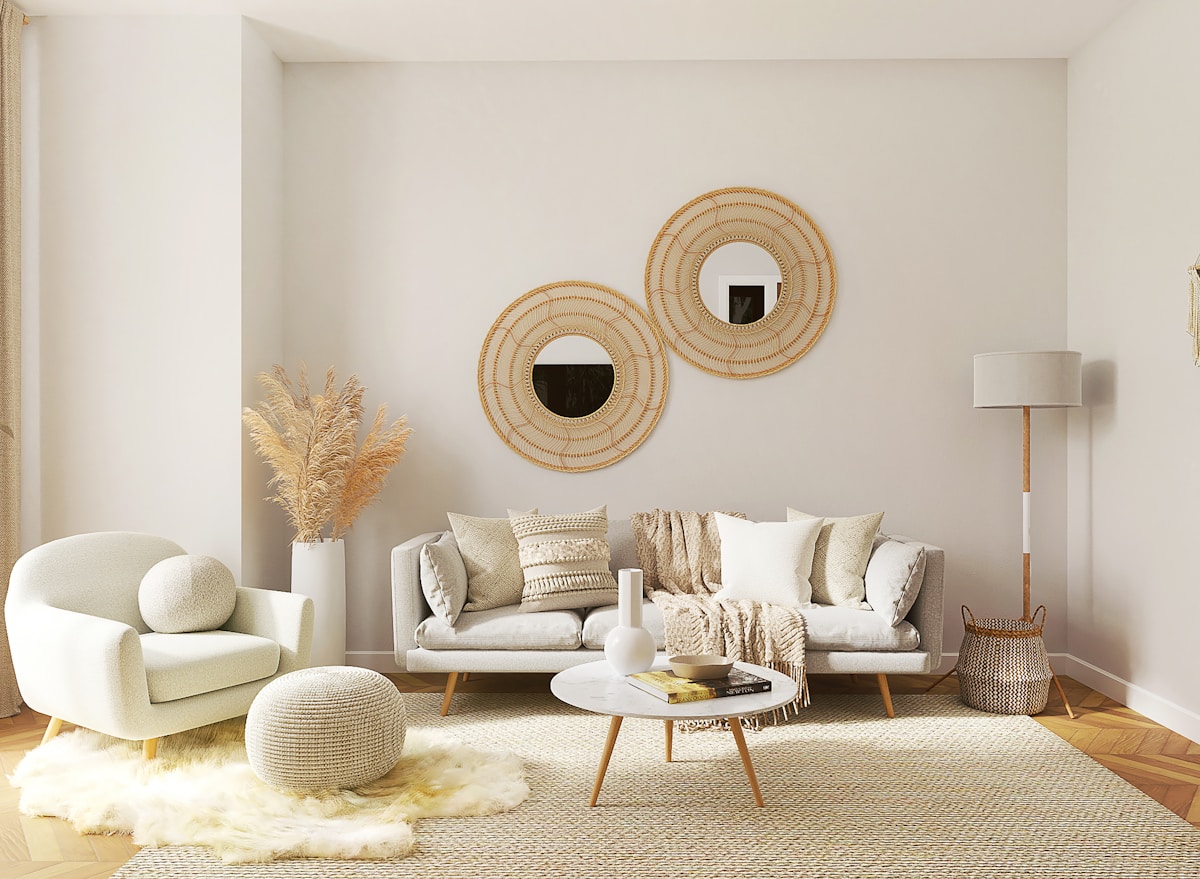
Your client is a recent graduate furnishing their first rental flat, or a landlord refurbishing a student property. Price is the primary constraint, and durability matters more than aesthetics. You need retailers with fast delivery, predictable quality, and minimal hand-holding.
Primary retailers: IKEA (70% of items), JYSK (bedroom and textiles), Dedeman/Dunelm (country-dependent finishing touches)
Secondary: Maisons du Monde (lighting and decor accents only)
Avoid: Westwing (over-budget), John Lewis (way over-budget), Home24 (lead time risk)
Strategy: Use IKEA for living room, kitchen, and storage. Use JYSK for mattress, bed frame, and linens. Keep 10–15% of budget for accessories from Maisons du Monde or local retailers to add personality. Prioritise in-stock items with immediate delivery to avoid delays.
Mid-Range Residential (Total Budget: €15,000–€40,000)
Your client is an established professional furnishing a primary residence. They want quality that lasts, design that reflects their taste, and a mix of investment pieces and accessible items. You have room to curate, but budget discipline matters.
Primary retailers: Westwing (living room and statement pieces), Maisons du Monde (dining and decor), IKEA (storage and utility)
Secondary: John Lewis or Dunelm (UK-only; upholstered furniture), Home24 (if lead time flexibility exists)
Avoid: JYSK (quality ceiling too low), XXXLutz (aesthetic limitations), Dedeman (too budget-focused)
Strategy: Spend 40–50% of budget on anchor pieces from Westwing or John Lewis: sofa, dining table, bed frame. Use Maisons du Monde for lighting, chairs, and side tables. Fill functional gaps with IKEA: kitchen storage, wardrobes, laundry solutions. Reserve 10% for custom or vintage pieces to add uniqueness.
High-End Residential (Total Budget: €50,000+)
Your client expects bespoke quality, exceptional service, and design that feels personal. Mainstream retailers play a minimal role; you're sourcing from boutique brands, trade showrooms, and custom makers. The retailers in this guide are only useful for utility spaces or temporary solutions.
Primary retailers: None (custom and trade-only sources dominate)
Secondary: Westwing (guest bedroom or home office only), John Lewis (if client values guarantees for children's furniture)
Avoid: IKEA, JYSK, XXXLutz, Dedeman, Dunelm (brand recognition undermines positioning)
Strategy: Use Westwing or John Lewis only for secondary spaces where budget can flex down: guest bedrooms, home gyms, laundry rooms. Even then, these are gap-fillers, not anchors. Your sourcing focus is on Italian, Scandinavian, and British trade brands unavailable to consumers.
Commercial Hospitality (Hotels, Restaurants, Cafés)
Commercial projects demand durability, bulk discounts, coordinated delivery, and contract-grade quality. Most consumer-facing retailers in this guide aren't suitable. The exceptions are IKEA Business (for budget hotels and staff areas) and Leroy Merlin (for back-of-house and outdoor).
Primary retailers: IKEA Business (budget chains, staff areas), Leroy Merlin (outdoor dining, back-of-house)
Secondary: XXXLutz (Eastern European budget hotels only)
Avoid: Westwing, Home24, Maisons du Monde (consumer-grade quality, no contract warranties)
Strategy: For commercial work, shift to contract furniture specialists (Vitra, Arper, HAY Contract, Muuto). Use IKEA Business only for non-public-facing spaces or ultra-budget projects where durability matters less than cost. Leroy Merlin works for outdoor furniture, kitchen fit-outs, and utility areas in hospitality projects.
Trade Programme Deep Dive
Not all trade discounts are created equal. Some retailers offer automatic discounts upon registration; others require portfolio reviews, minimum order values, or relationship-building. Here's what you need to know to maximise value.
Easy Access (Register and Save)
- IKEA Business: Register online with business docs, get 5–15% immediately
- JYSK Professional: Business registration, 10–20% off, no portfolio needed
- Maisons du Monde Pro: VAT number and business registration, 10–15% automatic
- Dunelm Business: Register online, 10% off most ranges instantly
- Dedeman Professional: Romanian business registration, 5–10% off
Portfolio Review Required
- Westwing Trade: Submit portfolio (minimum 3 completed projects), business proof, and project pipeline; 15–25% if approved
- John Lewis Trade: Relationship-based; initial meeting with account manager, portfolio review, then case-by-case negotiation (10–20%)
Variable/Subsidiary-Dependent
- XXXLutz Business: Discount varies by country and subsidiary (5–10%); inconsistent application
- Home24 Business: 10–15% on most items, but supplier-dependent (some excluded)
- Leroy Merlin Pro: 5–15% depending on product category and country; French market gets best terms
Pro tip: Don't assume trade discounts stack with sales. Most retailers exclude trade accounts from promotional pricing. Ask explicitly before ordering whether you're better off using your trade discount or waiting for a consumer-facing sale.
Common Retailer Pitfalls (And How to Avoid Them)

Delivery Date Assumptions
Never assume delivery dates are firm. IKEA, XXXLutz, and Home24 are notorious for delays, especially for out-of-stock items. Always add a two-week buffer to quoted lead times, and confirm stock availability before specifying items to clients. If a project has a hard deadline (moving date, event), choose retailers with in-stock confirmation and reliable delivery track records (JYSK, Leroy Merlin, John Lewis).
Quality Variability Within Ranges
Retailers like IKEA, Westwing, and Home24 carry products across wide quality spectrums. An IKEA EKTORP sofa is not comparable to an IKEA SÖDERHAMN, even though both are from the same retailer. Learn which product lines deliver quality and which are false economies. For Westwing and Home24, research the specific supplier brand, not just the marketplace.
Trade Discount Exclusions
Read the fine print. Many retailers exclude certain categories (lighting, outdoor, sale items) from trade discounts. Westwing excludes already-discounted brands. IKEA Business excludes some kitchen ranges. Always check per-item eligibility before quoting project costs to clients.
Returns and Damage Claims
Returning furniture is painful everywhere, but it's excruciating with marketplace retailers (Westwing, Home24) and outsourced delivery services (IKEA, XXXLutz). Document everything: photograph items upon delivery, note damage immediately, and file claims within 24–48 hours. For high-stakes projects, consider paying extra for white-glove delivery services where installers inspect items before leaving.
Cross-Border Complications
Post-Brexit, UK retailers (John Lewis, Dunelm) don't deliver to the EU, and EU retailers often have expensive or slow UK delivery. Don't assume pan-European coverage even for major chains. Check delivery maps before specifying, especially for border regions (Northern Ireland, Switzerland, Gibraltar).
How ArcOps Solves the Multi-Retailer Chaos

You've just read 3,000 words on ten retailers, and you're probably thinking: "I still have to search all of them manually?" That's the absurdity of modern interior design sourcing. You need a sofa in midnight blue velvet, under €1,200, delivered to Lyon in three weeks—and you're about to open ten browser tabs.
ArcOps aggregates product catalogues from European furniture retailers into one search interface. You filter by dimensions, colour, material, price, and delivery location, and see results from IKEA, Westwing, Maisons du Monde, and others simultaneously. No more tab-hopping, no more manual price comparisons, no more discovering at checkout that your chosen retailer doesn't ship to your client's address.
The platform shows real-time stock status, estimated delivery dates, and trade pricing (if you've connected your trade accounts). You can save products to project boards, compare options side-by-side, and share curated selections with clients—all without leaving one interface. It's not about replacing your retailer knowledge; it's about making that knowledge actionable in seconds, not hours.
Key Takeaways
- Retailer selection is a professional skill, not a convenience decision. Match retailers to project budgets, geographies, timelines, and quality expectations systematically.
- IKEA and JYSK dominate budget residential across Europe, but delivery reliability and quality inconsistency require careful product-line knowledge.
- Westwing and Maisons du Monde serve mid-range contemporary projects well, but stock availability and lead time variability demand buffer planning.
- John Lewis is the UK quality benchmark; Leroy Merlin excels at renovation integration; Dedeman and Dunelm are regional specialists with limited geographic reach.
- Trade programmes vary wildly: some require only registration (IKEA, JYSK), others demand portfolio reviews (Westwing, John Lewis), and most exclude sale items and certain categories.
- Delivery reliability separates professionals from amateurs. JYSK and Leroy Merlin deliver consistently; IKEA and XXXLutz have frequent issues; marketplace retailers (Westwing, Home24) depend on individual suppliers.
- Quality is product-line-specific, not retailer-wide. Learn which ranges within each retailer deliver value, and which ones destroy client trust.
- Cross-border and post-Brexit complications make geographic coverage a non-negotiable consideration. Confirm delivery capability before specifying items.
- Multi-retailer sourcing is inefficient without aggregation tools. Searching ten retailers manually for every item wastes hours you could spend designing.
FAQ
Which European furniture retailer offers the best trade discount for interior designers?
Westwing Trade offers 15–25%, the highest in this comparison, but requires portfolio approval. For immediate access without review, JYSK Professional (10–20%) and Maisons du Monde Pro (10–15%) offer the best discounts. IKEA Business varies by country (5–15%), and John Lewis negotiates case-by-case (10–20%). Always confirm whether trade discounts apply to your specific product selections, as exclusions are common.
Can I use IKEA for mid-range interior design projects, or does it undermine my professional positioning?
IKEA works for mid-range projects if used strategically. Reserve it for utility and storage (wardrobes, kitchen organisers, office furniture) while sourcing statement pieces (sofas, dining tables, lighting) from Westwing, Maisons du Monde, or John Lewis. Clients respect budget discipline, but a fully-IKEA apartment signals junior-level design. Mix retailers to balance cost and credibility. For high-end projects (€50,000+), avoid IKEA entirely except for temporary or staff-only spaces.
Which furniture retailer has the most reliable delivery across Europe?
JYSK and Leroy Merlin have the most reliable delivery networks, with in-house logistics in their core markets and accurate lead time estimates. John Lewis is flawless in the UK. IKEA, XXXLutz, and Home24 have the worst delivery reputations, relying on third-party couriers who frequently delay, damage, or misdeliver items. For deadline-sensitive projects, prioritise retailers with in-house delivery or pay extra for white-glove services.
Are marketplace furniture retailers like Westwing and Home24 worth the quality risk?
Westwing is worth it if you research the specific brand behind each product and build in lead time buffers. Their curation skews toward reputable mid-premium suppliers, and their trade programme is excellent. Home24 is riskier because quality and lead times vary wildly across 150+ suppliers, and returns are complicated. Use Home24 only when you're familiar with the supplier brand or when the client can absorb delivery uncertainty. For high-stakes projects, stick to direct retailers (IKEA, JYSK, John Lewis).
How do I avoid delivery delays when sourcing furniture for client projects?
Confirm stock availability before specifying items (call the trade desk; don't trust website stock indicators). Always add a two-week buffer to quoted lead times, especially for IKEA, XXXLutz, and marketplace retailers. Choose retailers with reliable delivery track records (JYSK, Leroy Merlin, John Lewis) for deadline-critical projects. Avoid peak seasons (September–November, January) when delivery networks are strained. For custom or made-to-order furniture, add four weeks minimum to any estimate.