

Kitchen Design Trends in Europe for 2026: Materials, Colours, and Where to Source Them
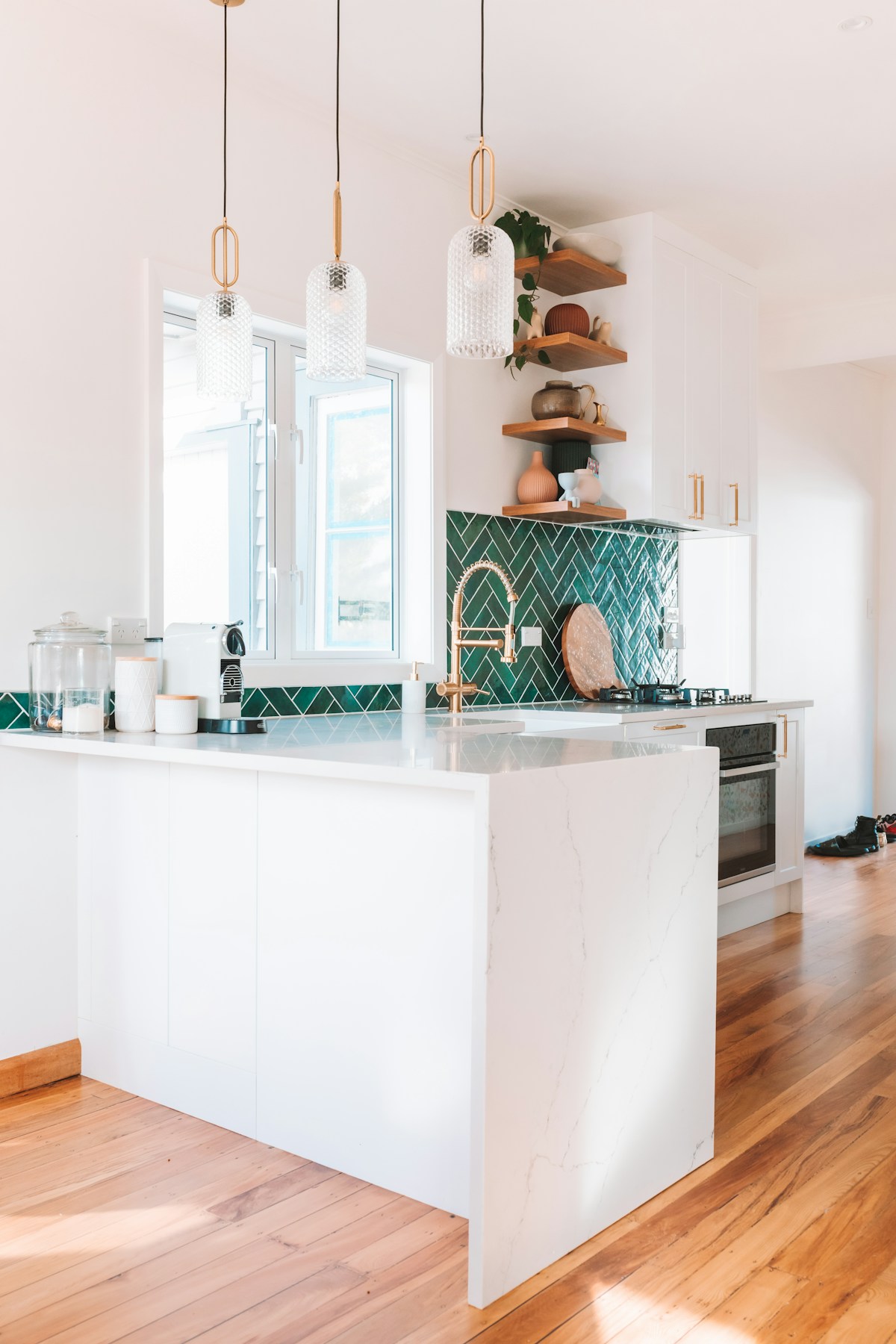
Picture this: you're presenting a kitchen redesign to a client who wants something fresh, functional, and unmistakably now. They've scrolled through Pinterest, bookmarked a dozen Instagram posts, and they're asking you what's truly trending in 2026. You need to show them you're ahead of the curve—and that you know exactly where to source every detail without blowing their budget.
Kitchen design trends 2026 are all about blending natural warmth with refined functionality. From fluted wood cabinetry to forest green accents and integrated appliances, European kitchens are becoming smarter, more sustainable, and infinitely more stylish. Whether you're working on a compact city flat or a sprawling countryside home, this guide will walk you through the biggest kitchen interior design trends, the materials that matter, and—crucially—where to find them at realistic prices across Europe.
The 10 Biggest Kitchen Design Trends in Europe for 2026
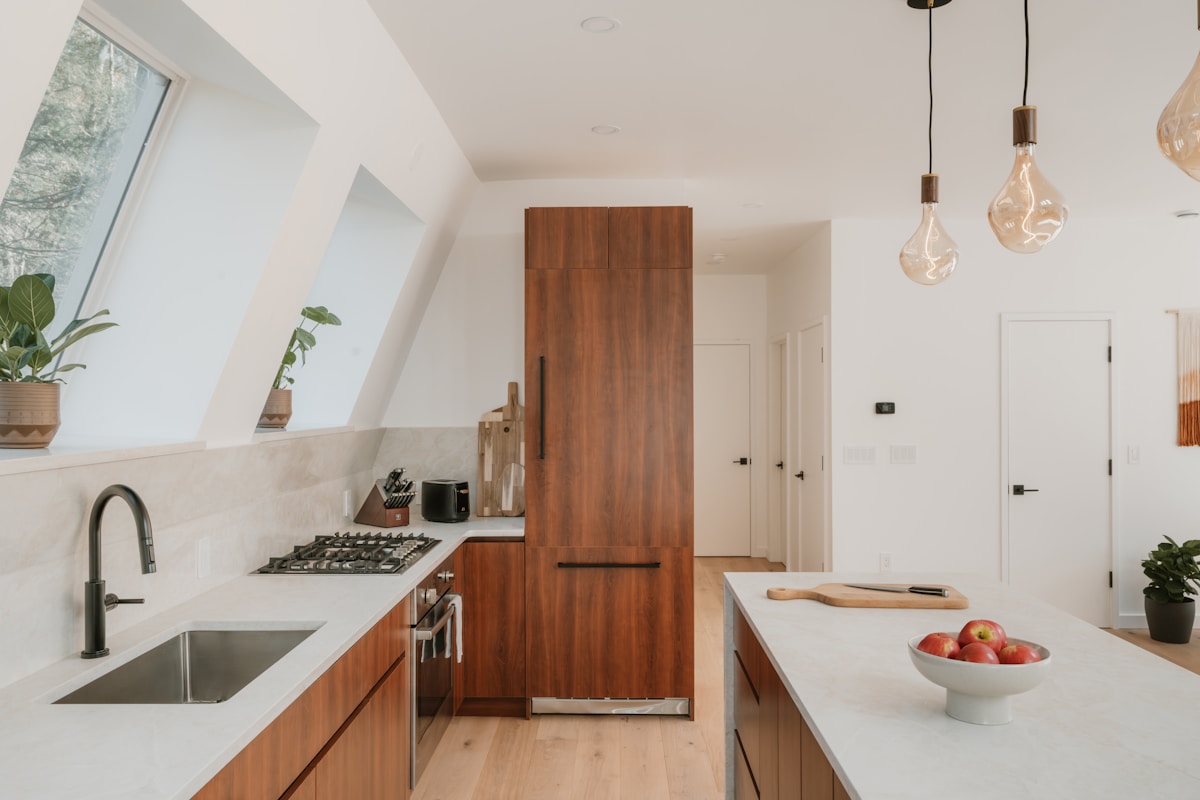
Before we dive into materials and sourcing, let's map out the modern kitchen ideas 2026 that are dominating design briefs from Berlin to Barcelona. These aren't fleeting fads—they're shifts in how people live, cook, and gather.
1. Natural stone countertops (marble, quartzite, granite) are back, but with honed or leathered finishes instead of high gloss. 2. Fluted wood cabinetry adds tactile interest without pattern overload. 3. Terrazzo backsplashes bring colour and texture in a way that feels collected, not matchy. 4. Recycled composite surfaces (like Caesarstone or Dekton) offer sustainability credentials alongside durability.
5. Forest green and warm terracotta are the hero colours, often paired with cream or off-white base tones. 6. Matte black hardware and brass accents create contrast and sophistication. 7. Kitchen islands are evolving into social hubs with integrated seating, wine fridges, and even induction hobs. 8. Pantry walls and hidden appliances keep clutter out of sight, letting the design breathe.
9. Integrated handles (push-to-open or recessed) streamline cabinetry for a minimalist look. 10. Statement taps in brushed brass or matte black are becoming the jewellery of the kitchen. These trends share a common thread: they celebrate craftsmanship, tactility, and a sense of calm, curated living.
Materials That Matter: Sourcing Natural Stone, Wood, and Composites
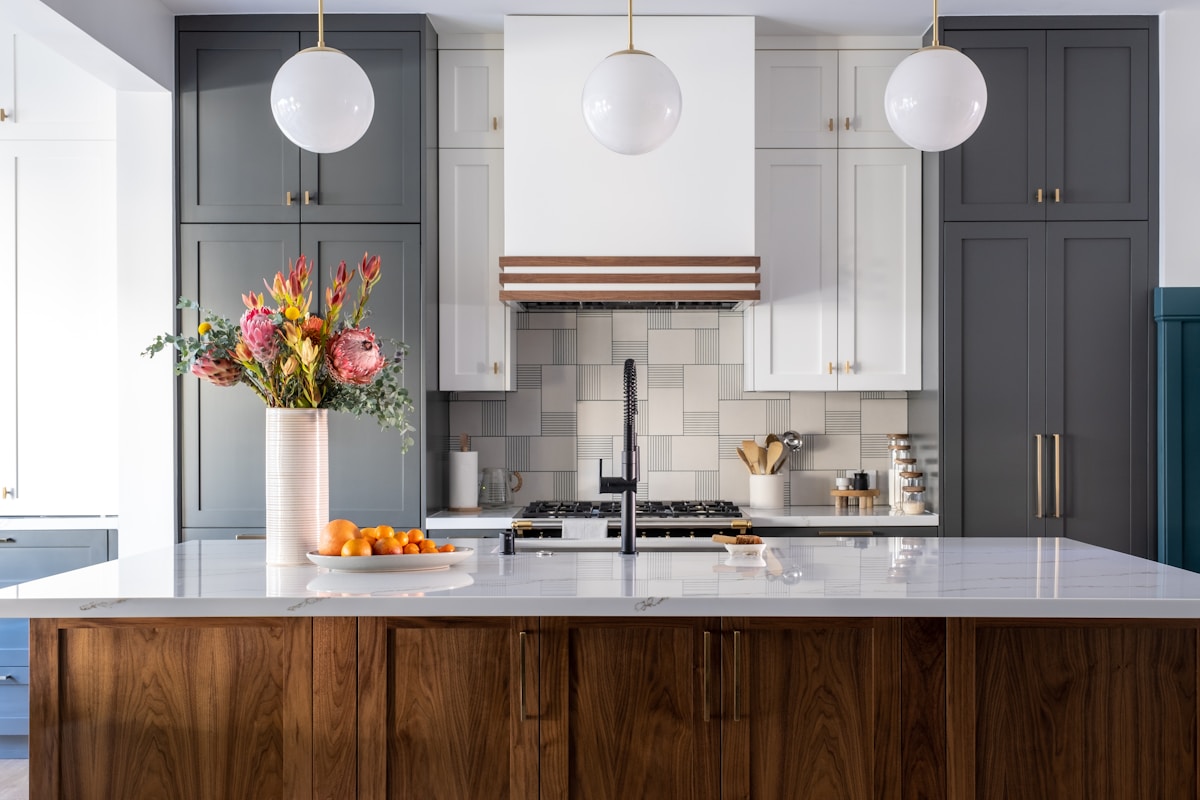
Let's talk specifics. Your clients are asking for natural stone countertops, and you need to know which types work best—and where to source them affordably across the EU.
Marble remains the gold standard for luxury, but honed Carrara or Calacatta are more forgiving than polished versions (no watermarks from every coffee cup). Expect to pay €200–€400 per m² for mid-tier marble slabs at suppliers like Leroy Merlin or local stone yards. Quartzite is harder than marble, more heat-resistant, and comes in stunning veined patterns; budget €250–€500 per m². Granite is the workhorse—durable, stain-resistant, and available in everything from speckled grey to deep black. You'll find remnants and off-cuts at Leroy Merlin or German stone suppliers like Naturstein for €150–€300 per m².
If your client loves the look of stone but needs something more budget-friendly and low-maintenance, recycled composite surfaces are your answer. Caesarstone and Dekton offer the aesthetic of marble or concrete without the porosity, and they're made from up to 75% recycled content. Prices range from €180–€350 per m², and you can order samples directly from their European distributors or through IKEA's kitchen planning service, which offers Caesarstone as an upgrade option.
For cabinetry, fluted wood is the texture of the moment. Think vertical grooves on cabinet doors or island fronts, in oak, walnut, or ash. IKEA's BODARP fronts in grey-green or ASKERSUND in ash effect offer a fluted-adjacent look for €100–€200 per door. For custom fluted panels, reach out to Maisons du Monde or European joinery suppliers like Schreinerei in Germany, where bespoke fronts start at €300–€600 per m² depending on wood species.
Terrazzo is making a major comeback, especially in backsplashes. You can source terrazzo tiles from Leroy Merlin (around €40–€80 per m²) or splurge on Westwing's curated terrazzo collections for €80–€150 per m². If you're going bespoke, poured terrazzo is stunning but pricey—expect €250–€500 per m² installed.
Colours That Define 2026 Kitchens: From Forest Greens to Warm Neutrals
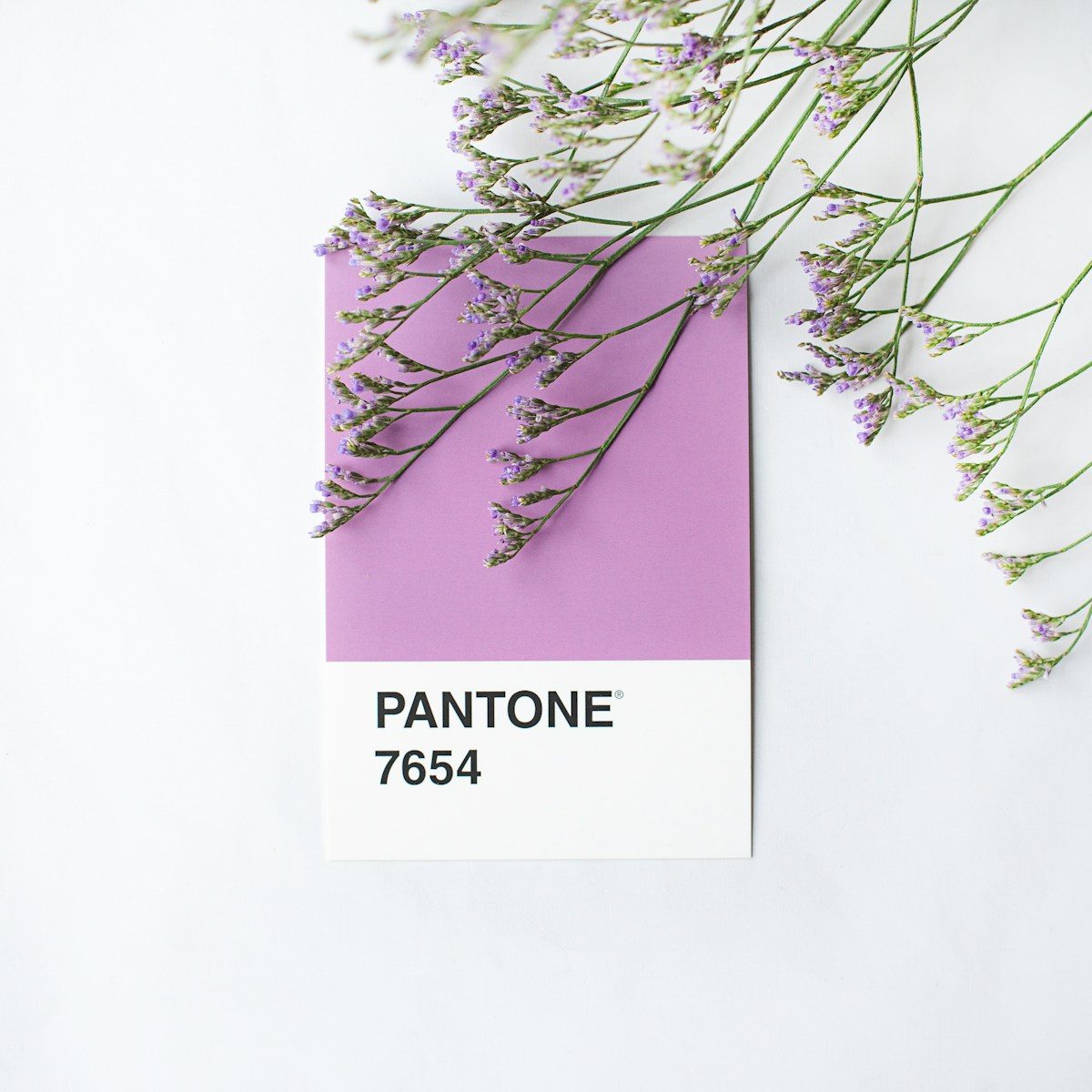
Colour is where European kitchen design gets personal. The palette for 2026 is earthy, grounded, and just a little bit moody—perfect for clients who want character without chaos.
Forest green is the hero. We're talking deep, velvety greens that evoke Alpine forests or English countryside. Paint lower cabinets in Farrow & Ball's Studio Green or Little Greene's Invisible Green (both around €70–€90 per 2.5L). Or opt for IKEA's BODARP fronts in green for a ready-made solution at €100–€200 per door. Pair green with cream or off-white uppers to keep the space feeling airy—try IKEA's BODBYN off-white or Maisons du Monde's Authentique collection in ivory.
Warm terracotta is the second colour story, especially for accent walls, backsplashes, or even terracotta floor tiles. You can source terracotta zellige tiles from Leroy Merlin for €30–€60 per m², or go for a softer terracotta paint on a feature wall (Farrow & Ball's Red Earth at €70 per 2.5L).
Matte black and brass accents are your neutral anchors. Matte black hardware (handles, taps, light fixtures) creates contrast against light cabinets and natural wood. IKEA's ENHET black handles are a steal at €2–€5 each, or invest in Buster + Punch's brass and black hardware for €25–€60 per handle via Westwing. Statement taps in brushed brass or matte black are non-negotiable—check Grohe's Minta or Essence lines (around €150–€300) or Quooker's boiling-water taps in brass for €1,200–€1,800 (a splurge your clients will love).
The beauty of this palette? It works in compact city kitchens and open-plan country homes alike. Keep the base neutral, add green or terracotta as an accent, and layer in black or brass details for contrast.
Fixtures and Hardware: Integrated Handles, Brass, and Statement Taps
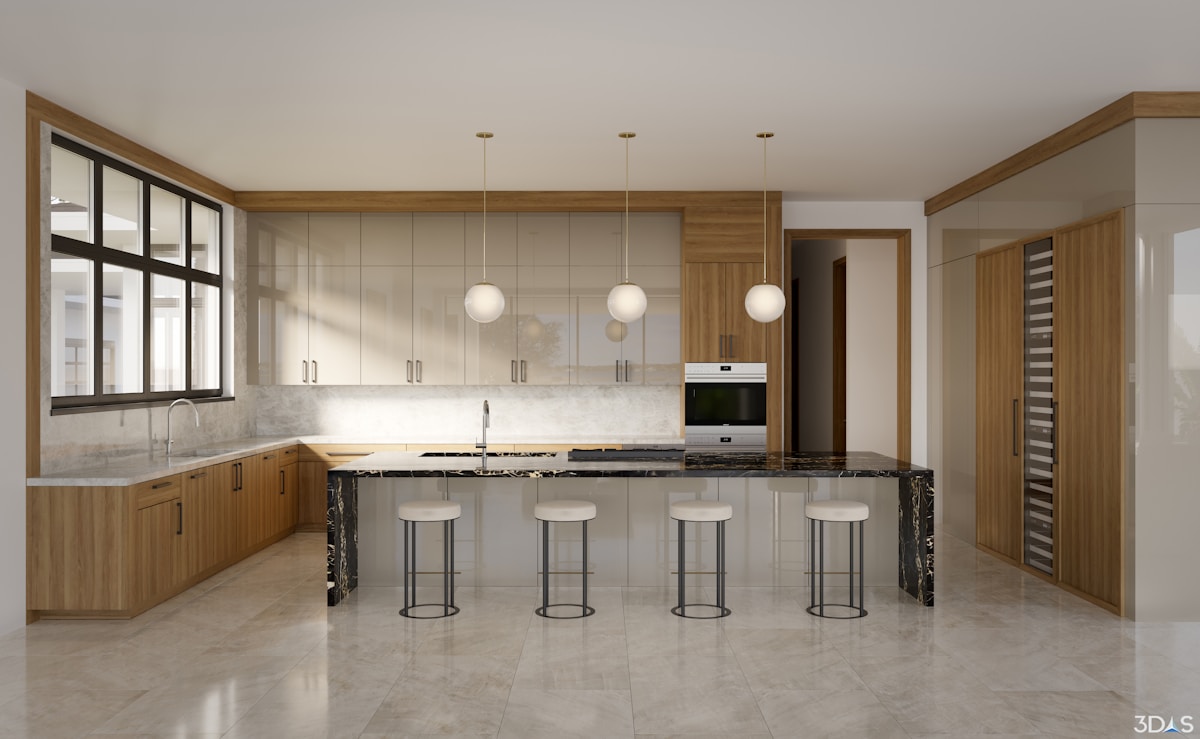
Hardware is where your modern kitchen ideas 2026 come to life. Clients notice handles, taps, and lighting—these are the touchpoints that make a space feel considered.
Integrated handles are everywhere. Push-to-open mechanisms (like IKEA's UTRUSTA) or recessed J-pull handles create clean, handleless fronts. If you're working with a joiner, ask for routed handles cut directly into the cabinet doors—this costs €50–€100 per door but looks incredibly high-end. Alternatively, Leroy Merlin stocks affordable aluminium profile handles for €10–€20 per metre.
Brass and gold accents are softening the minimalist trend. Think brushed brass cabinet knobs, gold-framed mirrors above the sink, or brass pendant lights over the island. Maisons du Monde offers brass cabinet knobs for €8–€15 each, while Westwing curates vintage-inspired brass handles for €20–€40 each. Pair brass with matte black for a mixed-metal look that feels curated, not coordinated.
Statement taps are the jewellery of the kitchen. Your clients want taps that look like sculptural objects. Grohe's Essence tap in brushed brass is a design classic at €250–€350. For matte black, try Franke's Atlas Neo tap at €150–€200. If your client wants the ultimate wow factor, Quooker's boiling-water taps (which deliver instant boiling, chilled, and sparkling water) start at €1,200 and come in brushed brass, chrome, or matte black. Yes, it's a splurge—but it's also a daily luxury that clients never regret.
Open shelving is another hardware trend. Floating shelves in oak or walnut break up wall cabinets and give clients a place to display ceramics, cookbooks, or plants. IKEA's MÖLLEKULLA oak shelves are €30–€50 for a 115cm length, while bespoke floating shelves from a joiner cost €100–€200 per shelf depending on size and finish.
Layout Trends: Islands, Pantry Walls, and Hidden Appliances
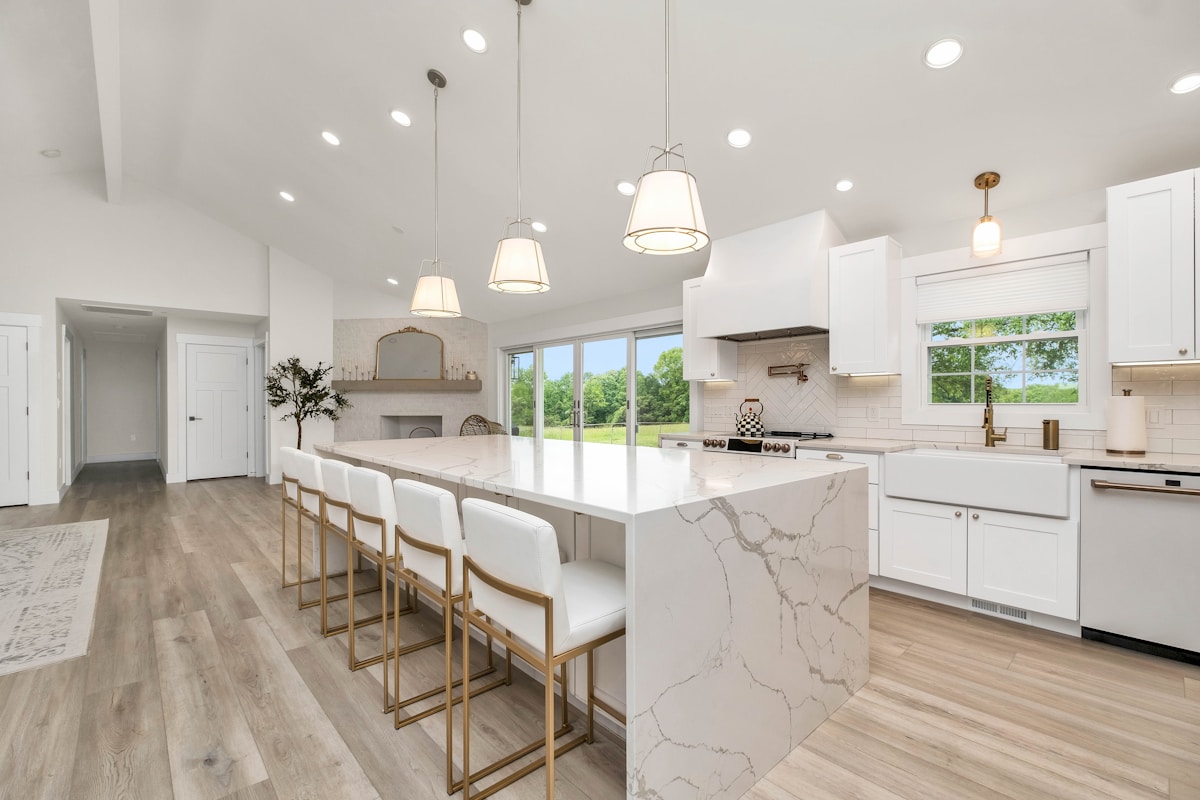
Kitchen interior design trends aren't just about finishes—they're about how space works. In 2026, layouts are getting smarter, more social, and more storage-savvy.
Kitchen islands are no longer just prep zones—they're social hubs. Clients want islands with integrated seating (either a raised breakfast bar or a flush dining extension), wine fridges, induction hobs, and even sinks. IKEA's METOD island units start at €500–€800 for a base structure, which you can then top with Caesarstone or natural stone. Add bar stools from Maisons du Monde (€80–€150 each) or Westwing's velvet counter stools (€120–€200 each) for a finishing touch.
Pantry walls are the organisational dream. Instead of scattering storage across multiple cabinets, a single floor-to-ceiling pantry wall consolidates dry goods, small appliances, and cleaning supplies. IKEA's METOD tall cabinets with pull-out drawers start at €400–€600 for a 60cm-wide unit. Add pull-out spice racks, wire baskets, and pull-down shelves for maximum functionality—Leroy Merlin stocks pantry organiser systems for €50–€150.
Hidden appliances are the holy grail of minimalist kitchens. Integrated fridge-freezers, dishwashers, and even ovens disappear behind cabinetry panels. IKEA offers integrated appliances (fridge-freezer around €800–€1,200, dishwasher €400–€600) that pair seamlessly with their cabinetry fronts. For high-end clients, Miele and Bosch offer fully integrated appliances with push-to-open doors—expect €1,500–€3,000 for a fridge-freezer and €800–€1,200 for a dishwasher.
The result? A kitchen that feels calm, uncluttered, and designed for real life—not just Instagram.
Where to Source: IKEA, Leroy Merlin, Westwing, and Beyond

You know the trends. Now let's talk sourcing. Here's a quick-reference guide to where to find products across the EU, with approximate EUR prices.
IKEA remains your go-to for modular kitchens. Their METOD system is endlessly customisable, and the BODARP green fronts (€100–€200 per door), ASKERSUND ash-effect fronts (€80–€150 per door), and Caesarstone countertop upgrades (€180–€300 per m²) hit every 2026 trend. Add UTRUSTA push-openers (€5–€10 per hinge), MÖLLEKULLA oak shelves (€30–€50), and ENHET black handles (€2–€5 each), and you've got a trend-forward kitchen for €5,000–€12,000 all-in.
Leroy Merlin is your hero for tiles, countertops, and hardware. Stock up on terrazzo tiles (€40–€80 per m²), terracotta zellige (€30–€60 per m²), marble remnants (€150–€300 per m²), and profile handles (€10–€20 per metre). Their pantry organiser systems (€50–€150) and lighting collections (€30–€100 per fixture) are solid mid-range options.
Westwing curates higher-end pieces—think brass cabinet handles (€20–€40 each), velvet bar stools (€120–€200), and artisan ceramics for open shelving (€30–€80 per piece). It's where you go when your client wants something special.
Maisons du Monde bridges affordable and aspirational. Their Authentique kitchen collection offers cream cabinetry and brass details, while their lighting and accessories (pendant lights €80–€200, brass knobs €8–€15) add character without custom pricing.
For appliances, Grohe (taps €150–€350), Quooker (boiling-water taps €1,200–€1,800), Miele and Bosch (integrated appliances €800–€3,000) are your quality benchmarks. And for stone, always check local suppliers—remnants and off-cuts can save clients 30–50% on countertops.
Bringing It All Together: A 2026 Kitchen Mood Board
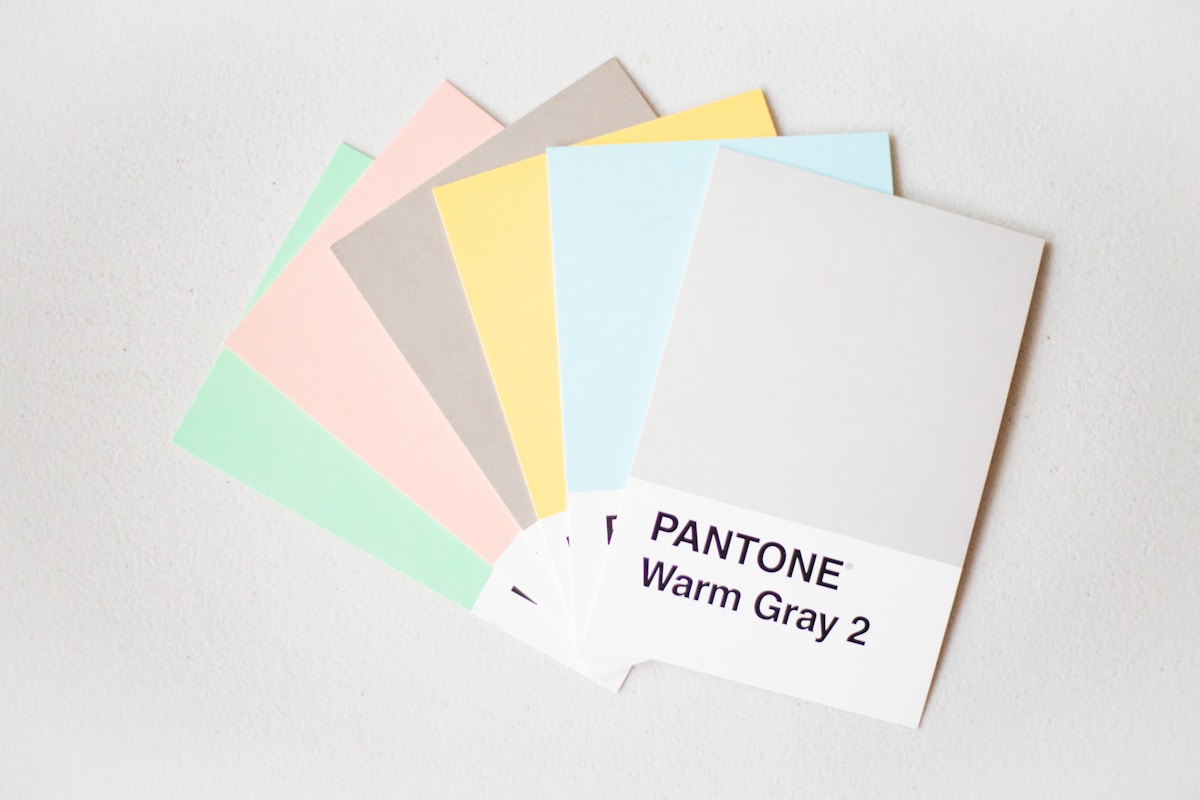
Let's say your client—Elena, 29, freelance designer in Berlin—wants a kitchen redesign that feels modern but warm, on a €15,000 budget. Here's how you'd pull it together.
Base: IKEA METOD cabinets in BODBYN off-white for uppers (€2,000), BODARP green for lowers (€2,500), with integrated handles (€200). Countertops: Caesarstone in concrete grey from IKEA (€1,800 for 5m²). Backsplash: Terrazzo tiles from Leroy Merlin (€300 for 4m²). Island: IKEA METOD base (€600) with Caesarstone top and brass bar stools from Maisons du Monde (€300 for two).
Hardware: IKEA ENHET matte black handles (€80), Grohe Essence tap in brushed brass (€280). Appliances: IKEA integrated fridge-freezer (€900), dishwasher (€500), induction hob (€400). Lighting: Pendant lights from Leroy Merlin (€120). Shelving: IKEA oak floating shelves (€90). Total: €10,070—leaving €4,930 for installation, paint, and contingency.
This is a kitchen that hits every 2026 trend: natural materials, forest green, brass accents, integrated appliances, and an island for gathering. It's stylish, sourceable, and sits comfortably within budget. And when Elena shares it on Instagram, her clients will be queuing up for the next one.
Why These Trends Matter for Your Design Business
Understanding kitchen design trends 2026 isn't just about knowing what's pretty—it's about positioning yourself as the designer who gets it. Your clients don't want to second-guess their choices six months in. They want confidence that their kitchen will feel fresh in 2026, 2027, and beyond.
These trends—natural stone, fluted wood, forest greens, integrated appliances—aren't passing fads. They're rooted in how people want to live: more sustainably, more tactilely, more intentionally. When you walk a client through a mood board that balances cream cabinetry, terrazzo backsplash, and brass taps, you're not just selling a look—you're selling a lifestyle.
And when you can say, "I can source this from IKEA for €2,000, or we can go custom for €5,000," you're showing them you respect their budget and their vision. That's the sweet spot where trust is built—and where repeat clients come from.
If you're juggling multiple projects and losing track of sourcing links, material specs, or client preferences, this is where a lightweight project tool can save hours. No need for complex software—just a simple way to keep every kitchen redesign organised, from mood boards to supplier contacts. (More on that in our product sourcing guide.)
Key Takeaways
- Kitchen design trends 2026 centre on natural materials, warm earthy colours, and smart, integrated layouts that prioritise both style and sustainability.
- Natural stone countertops (marble, quartzite, granite) and recycled composites (Caesarstone, Dekton) are the surfaces of choice, sourceable across Europe for €150–€500 per m².
- Fluted wood cabinetry, terrazzo backsplashes, and forest green or terracotta accents bring texture and warmth without overwhelming the space.
- Matte black and brass hardware, integrated handles, and statement taps create a refined, high-end look at accessible price points (handles from €2–€60, taps €150–€350).
- Kitchen islands as social hubs, pantry walls, and hidden appliances are layout trends that make kitchens more functional and clutter-free.
- IKEA, Leroy Merlin, Westwing, and Maisons du Monde are your go-to EU retailers for sourcing everything from cabinetry (€80–€200 per door) to tiles (€30–€80 per m²) to lighting (€30–€200 per fixture).
- A trend-forward kitchen redesign can be achieved for €10,000–€15,000 by mixing affordable modular systems with curated statement pieces.
Frequently Asked Questions
What are the biggest kitchen design trends for 2026 in Europe?
The top kitchen design trends 2026 include natural stone countertops (marble, quartzite), fluted wood cabinetry, terrazzo backsplashes, forest green and warm terracotta colour palettes, matte black and brass hardware, kitchen islands as social hubs, pantry walls, and hidden integrated appliances. These trends emphasise tactile materials, warm earthy tones, and streamlined, clutter-free layouts that feel both modern and inviting.
Where can I source affordable kitchen materials and fixtures in Europe?
IKEA offers modular cabinetry (METOD system) with trend-forward fronts like BODARP green (€100–€200 per door) and Caesarstone countertop upgrades (€180–€300 per m²). Leroy Merlin stocks terrazzo and terracotta tiles (€30–€80 per m²), marble remnants (€150–€300 per m²), and hardware (€10–€20 per metre for profile handles). Westwing and Maisons du Monde offer curated brass handles (€8–€40), bar stools (€80–€200), and lighting (€30–€200). For taps, Grohe and Quooker are reliable mid-to-high-end options (€150–€1,800).
What colours are trending for kitchens in 2026?
Forest green and warm terracotta are the standout colours, often paired with cream or off-white base tones for balance. Matte black hardware and brass or gold accents add contrast and sophistication. This palette works beautifully with natural materials like wood and stone, creating kitchens that feel grounded, warm, and effortlessly stylish.
How much does a trend-forward kitchen redesign cost in Europe?
A modern kitchen redesign hitting all the 2026 trends can range from €10,000 to €25,000+, depending on whether you use modular systems (IKEA, Leroy Merlin) or go bespoke. A typical €15,000 budget covers IKEA METOD cabinetry (€4,000–€5,000), Caesarstone countertops (€1,800–€2,500), terrazzo backsplash (€300–€500), integrated appliances (€1,800–€2,500), brass hardware and taps (€400–€600), lighting (€200–€400), and installation (€2,000–€3,000). Custom joinery, high-end appliances, or natural stone slabs will push costs higher.
What layout trends are defining European kitchens in 2026?
Kitchen islands are evolving into social hubs with integrated seating, wine fridges, and hobs, making them the heart of the home. Pantry walls (floor-to-ceiling storage units) consolidate dry goods and appliances in one streamlined zone, reducing clutter. Hidden appliances (integrated fridge-freezers, dishwashers, ovens) disappear behind cabinetry panels for a minimalist, cohesive look. These layouts prioritise both functionality and visual calm, perfect for open-plan living and smaller urban spaces alike.
Ready to streamline your next kitchen project? From mood boards to supplier lists, keeping every detail organised shouldn't feel like a project in itself. Explore how a simple workflow tool can help you stay on top of trends, budgets, and client preferences—without the overwhelm. Check out our trends roundup for more inspiration, dive into our colour trends guide for deeper palette advice, or browse our product sourcing guide for even more EU retailer recommendations.