

Office Room Concepts for 2026: 6-Step Designer's Guide to Hybrid Workspaces
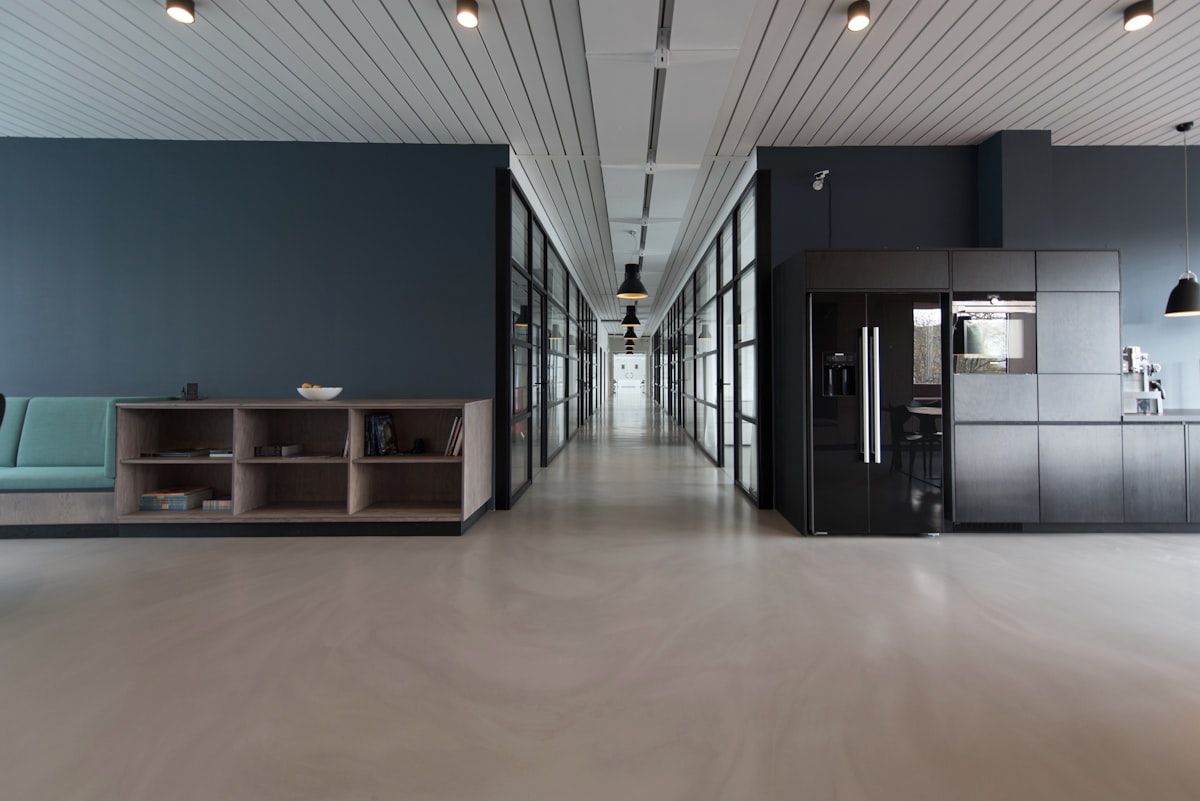
You have just walked into 500 square metres of open-plan office space in Munich. The carpet tiles are grey. The fluorescent tubes are buzzing. Eighty identical desks sit in rows, and half of them are empty because it is a Tuesday and most of the team is working from home.
The company's managing director turns to you and says: "We need a room concept. Something that makes people actually want to come back to the office."
This is the brief that is landing on interior designers' desks across Europe right now. With 30-40% of knowledge workers in the DACH region working hybrid, the traditional office is dead. But here is the opportunity: decision-makers are spending EUR 15,000-50,000 on office room concepts for spaces as small as 500 sqm. And they need designers who speak both spatial design and business outcomes.
In this guide, you will learn the exact methodology for planning, pitching, and delivering hybrid office room concepts in 2026 — from zone planning and acoustic standards to biophilic integration and the ROI data that gets your proposal approved.
Why Office Room Concepts Are the Biggest Growth Opportunity for Designers in 2026
The pandemic did not kill the office — it redefined it. European companies are no longer asking whether they need office space. They are asking how to make it work for a workforce that splits its week between home and headquarters.
This shift has created a gap in the market. Most existing office design content comes from:
- Office furniture sellers pushing their products (Sedus, Kinnarps, Bene) without genuine spatial thinking
- HR publications focused on culture and policy, not the physical environment
- Facility managers who optimise for cost, not experience
What decision-makers actually need is an interior designer who can translate hybrid work behaviour into spatial design — someone who understands both the DIN acoustic standards and the reason why the collaboration zone needs to be near the coffee station.
The numbers that win the pitch
- Activity-Based Working (ABW) increases productivity by up to 25% in organisations that implement it properly
- Desk sharing ratios of 0.6-0.8 desks per employee are now standard — meaning a company with 100 hybrid workers needs only 60-80 desks
- Reduced real estate costs often exceed EUR 100,000/year for medium offices — your EUR 30,000 concept fee pays for itself in four months
- Employee turnover drops 10-15% in well-designed offices, saving EUR 15,000-30,000 per avoided replacement
When you present these figures alongside your floor plan, you are no longer selling interior design. You are selling a business investment with measurable returns.
The 3 Office Concept Models Every Designer Must Know
Before you start drawing zones, you need to understand the three fundamental approaches to office room concepts. Most European offices in 2026 are moving toward Model 3, but your client's starting point determines which model fits.
Model 1: Traditional fixed-desk office
- Every employee has an assigned desk — personal photos, plants, the whole setup
- Best for: Teams with 90%+ office attendance (rare in 2026)
- Cost: Highest per-employee real estate cost
- Design focus: Ergonomics, storage, individual lighting
- When to recommend: Laboratories, trading floors, call centres — roles that require permanent physical presence
Model 2: Activity-Based Working (ABW)
- No assigned desks at all — employees choose their workspace based on their current task
- Best for: Fully flexible organisations with strong digital infrastructure
- Cost: Lowest real estate cost per employee (desk ratio 0.5-0.6)
- Design focus: Diverse zone types, clear wayfinding, technology-enabled booking
- When to recommend: Tech companies, creative agencies, consulting firms with high travel frequency
- Brands to source: Vitra Citizen Office system, USM modular furniture, Sedus se:works pods
Model 3: Hybrid model (the 2026 sweet spot)
- Combines fixed "home bases" with flexible shared zones — teams have a neighbourhood, individuals have flexibility within it
- Best for: Most European companies transitioning from traditional to flexible
- Cost: Moderate — desk ratio 0.6-0.8 per employee
- Design focus: Neighbourhood planning, bookable spaces, seamless transition between focus and collaboration
- When to recommend: This is what 70% of your commercial clients will need
The hybrid model is where designers add the most value. It requires spatial intelligence — understanding traffic flow, acoustic separation, and the psychology of where people choose to sit when they have options.
Zone Planning: The Core of Every Hybrid Office Room Concept
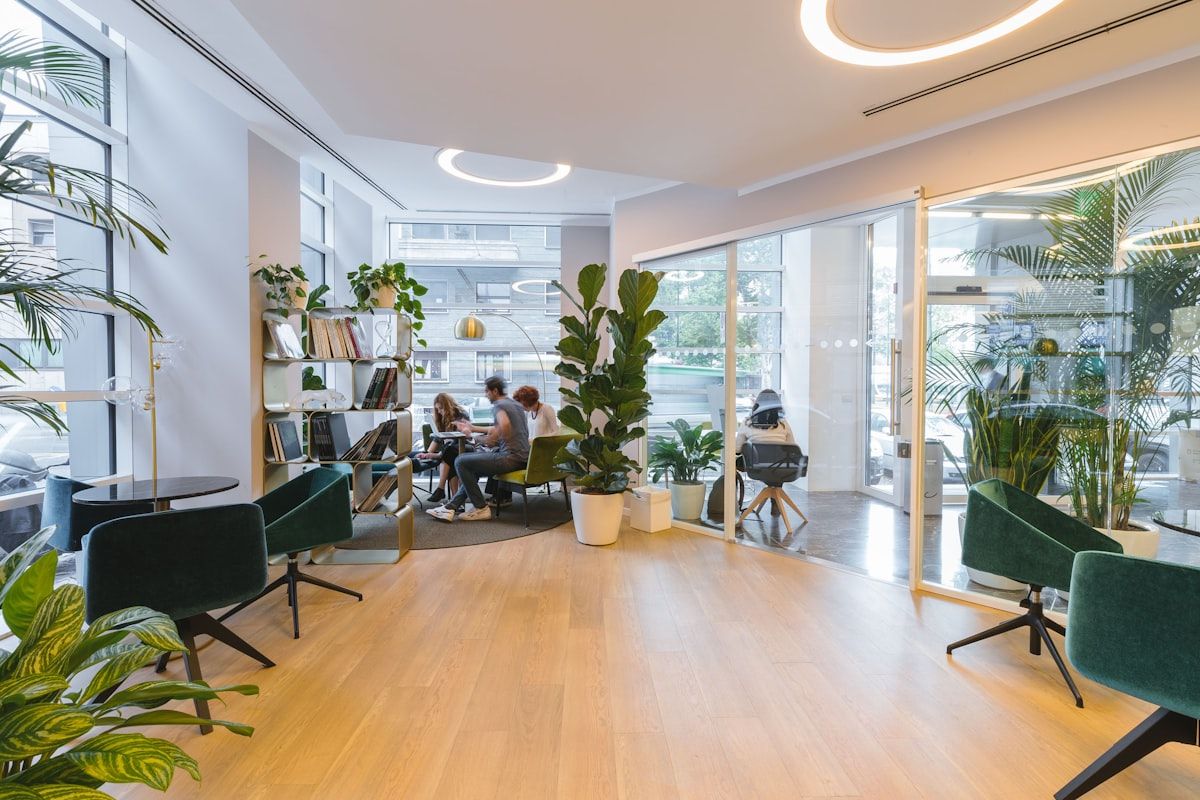
Zone planning is where your design expertise translates directly into business outcomes. A well-zoned hybrid office has four distinct zone types, each serving a specific work mode.
Focus zones: Where deep work happens
- Purpose: Individual concentration, phone calls, heads-down tasks
- Acoustic requirement: Background noise below 35-40 dB (DIN 18041)
- Design elements: Acoustic pods (Vitra Alcove, Bene PORTS), high-back seating, sound-absorbing ceiling panels, individual task lighting
- Space allocation: 25-35% of total office area
- Sourcing tip: Acoustic pods from Framery (Finnish manufacturer, EUR 5,000-15,000 per unit) or office-grade pods from IKEA Business are increasingly popular at the lower price point
Collaboration zones: Where ideas are born
- Purpose: Team meetings, brainstorming, project work, video calls with remote colleagues
- Design elements: Moveable furniture (Kinnarps flexibility systems), writable walls, integrated AV equipment, modular seating that can be reconfigured in minutes
- Space allocation: 30-40% of total office area
- Key detail: Position collaboration zones away from focus zones — sound travels, and nothing kills deep work faster than a brainstorm happening three metres away
- Video call consideration: Every meeting room needs a screen, camera, and microphone optimised for remote participants. The desk-sharing era means half your meeting participants are on a screen
Social zones: Where culture is built
- Purpose: Informal interaction, coffee breaks, team bonding, chance encounters
- Design elements: Comfortable lounge seating, kitchen/coffee area, bar-height tables, plants, warm lighting
- Space allocation: 15-20% of total office area
- Why this matters for hybrid: When people only come to the office 2-3 days a week, the social zone becomes the primary reason to show up. Design it like a hospitality space, not a cafeteria
- Sourcing: Muuto Oslo sofa for Scandinavian-inspired lounges, HAY About a Chair series for informal seating, or Kave Home for budget-conscious Mediterranean warmth
Regeneration zones: The overlooked differentiator
- Purpose: Mental recovery, quiet time, informal one-on-ones
- Design elements: Biophilic design (plant walls, natural materials, water features), subdued lighting, comfortable seating away from screens
- Space allocation: 5-10% of total office area
- Competitive advantage: Most office concepts stop at three zones. Adding a regeneration zone signals that you understand wellbeing as a design outcome, not just an HR buzzword
Practical tip: When presenting your zone plan, create a colour-coded floor plan where each zone type has a distinct colour. Decision-makers who are not designers can immediately see the balance between focus, collaboration, social, and regeneration space.
Managing an office fit-out project means tracking furniture from 20+ suppliers across multiple countries. ArcOps is building stage-based project management specifically for multi-vendor design projects — from concept approval through procurement to installation. [Join the waitlist to get early access.](https://arcops.studio)
Acoustics: The Most Underestimated Factor in Office Design
Ask any office worker what frustrates them most, and noise is consistently in the top three. Yet acoustics are often treated as an afterthought — something to fix after the furniture is in place. As a designer, acoustics should be your first technical consideration, not your last.
The standards you need to know
- DIN 18041 — German standard for acoustic quality in rooms. Specifies reverberation time targets based on room use (0.5-0.8 seconds for offices)
- ASR 3.7 — German workplace regulations for noise. Maximum 55 dB for mentally demanding work, 70 dB for simple office tasks
- DIN EN 12464-1 — Lighting standard (yes, it connects to acoustics — open ceilings with exposed ductwork look great but destroy acoustic performance)
Acoustic solutions by zone
- Focus zones: Acoustic ceiling absorbers (minimum 70% absorption coefficient), carpet flooring (reduces impact noise by 20-30 dB vs hard floors), desk-mounted acoustic screens, acoustic pods for phone calls
- Collaboration zones: Acoustic ceiling clouds above meeting tables, sound-masking systems for open collaboration areas, glass partition walls with acoustic film
- Social zones: Acoustic treatment is less critical here, but consider felt wall panels (Kvadrat Soft Cells or similar European manufacturers) to prevent the "cafeteria echo" effect
- Regeneration zones: Highest acoustic priority after focus zones — use thick carpeting, upholstered surfaces, and plant walls (which provide surprising acoustic absorption)
The carpet vs. hard floor debate
This is a conversation you will have with every commercial client. The design trend favours exposed concrete, polished screed, and large-format tiles. But hard floors increase ambient noise by 8-12 dB compared to carpet.
The compromise: use carpet tiles in focus zones (brands like Interface, Desso/Tarkett, or Forbo — all European manufacturers with strong sustainability credentials) and hard flooring in social and circulation areas. The zone plan gives you the justification for this material transition.

Biophilic Design in Commercial Offices: The Data That Sells It
Biophilic design has moved from "nice-to-have" to boardroom-level strategy in 2026. The research data is now so strong that you can present biophilic elements as a measurable business investment.
The ROI of bringing nature indoors
- Productivity increases by 6-15% in offices with biophilic elements (Human Spaces report)
- Wellbeing improves by 15% — fewer sick days, higher satisfaction scores
- Creativity rises by 15% — critical for innovation-driven companies
- Absenteeism drops by 10% in offices with natural light optimisation and plant integration
Practical biophilic elements for office room concepts
- Plant walls and green dividers: Use as natural zone separators between collaboration and focus areas. Brands like Greenarea (Spanish manufacturer) or Moos-Moos Manufaktur (German) offer modular systems starting at EUR 300-600 per sqm
- Natural materials: Specify timber acoustic panels instead of synthetic alternatives. Oak, birch, and linden wood absorb sound while adding warmth. Source from Scandinavian suppliers like Woodio (Finnish) or check Leroy Merlin for project quantities
- Daylight optimisation: DIN EN 12464-1 requires 500 lux at desk level. But go beyond the minimum — plan desk positioning to maximise natural light exposure, use light shelves or reflective ceiling elements to push daylight deeper into the floor plate
- Circadian rhythm lighting: LED systems that shift colour temperature from 4000K (energising, morning) to 3000K (calming, afternoon). Brands like ERCO (German), Zumtobel (Austrian), or Flos (Italian) offer tunable office solutions
- Water features: Even small tabletop water elements in regeneration zones reduce perceived stress. Position them away from focus zones where the sound could become a distraction
How to present biophilic ROI to decision-makers
Do not show mood boards of tropical plant walls. Instead, create a cost-benefit slide that looks like this:
- Investment: EUR 8,000-15,000 for biophilic integration in a 500 sqm office (plant walls, natural materials, circadian lighting upgrades)
- Annual savings from reduced sick days: EUR 3,000-6,000 (based on 50 employees, 1-2 fewer sick days per year)
- Productivity gain: If 50 employees each gain 30 minutes per week, that is 1,300 hours/year — worth EUR 40,000-65,000 at average DACH salaries
- Payback period: 3-6 months
This is the language that gets budgets approved. You are not selling plants — you are selling a 3-month payback on a productivity investment.
Tracking procurement across Vitra, IKEA Business, Framery, and local acoustic suppliers? ArcOps lets you manage every vendor, every order, and every margin in one project dashboard — built for European designers working with European suppliers. [Reserve your free founding member spot.](https://arcops.studio)
Technology Integration: Desk Booking, Sensors, and AV Design
A hybrid office room concept without technology integration is incomplete. Your clients will ask about desk booking on day one. Being prepared with recommendations builds credibility and often extends your project scope.
Desk booking systems
These are the platforms dominating the European market in 2026:
- desk.ly — German-built, GDPR-compliant, integrates with Microsoft 365. Popular in DACH. Pricing from EUR 2-4 per desk/month
- Seatti — Berlin-based, focuses on team coordination ("see who is coming in on Tuesday"). Strong in mid-market companies
- Flexopus — Austrian provider, known for floor plan integration and analytics dashboards. Pricing from EUR 1.50 per user/month
- deskbird — Swiss-German, emphasis on analytics and space utilisation data
As a designer, you do not need to implement these systems. But recommending one during your concept presentation shows you think holistically — and it often leads to a technology integration add-on to your project scope.
Smart sensors and video conferencing design
Recommend occupancy sensors that track desk usage, meeting room fill rates, and zone traffic patterns. This data validates your design assumptions and creates a powerful argument for a post-occupancy review — a follow-up project 6-12 months after installation. That is recurring revenue from a single client.
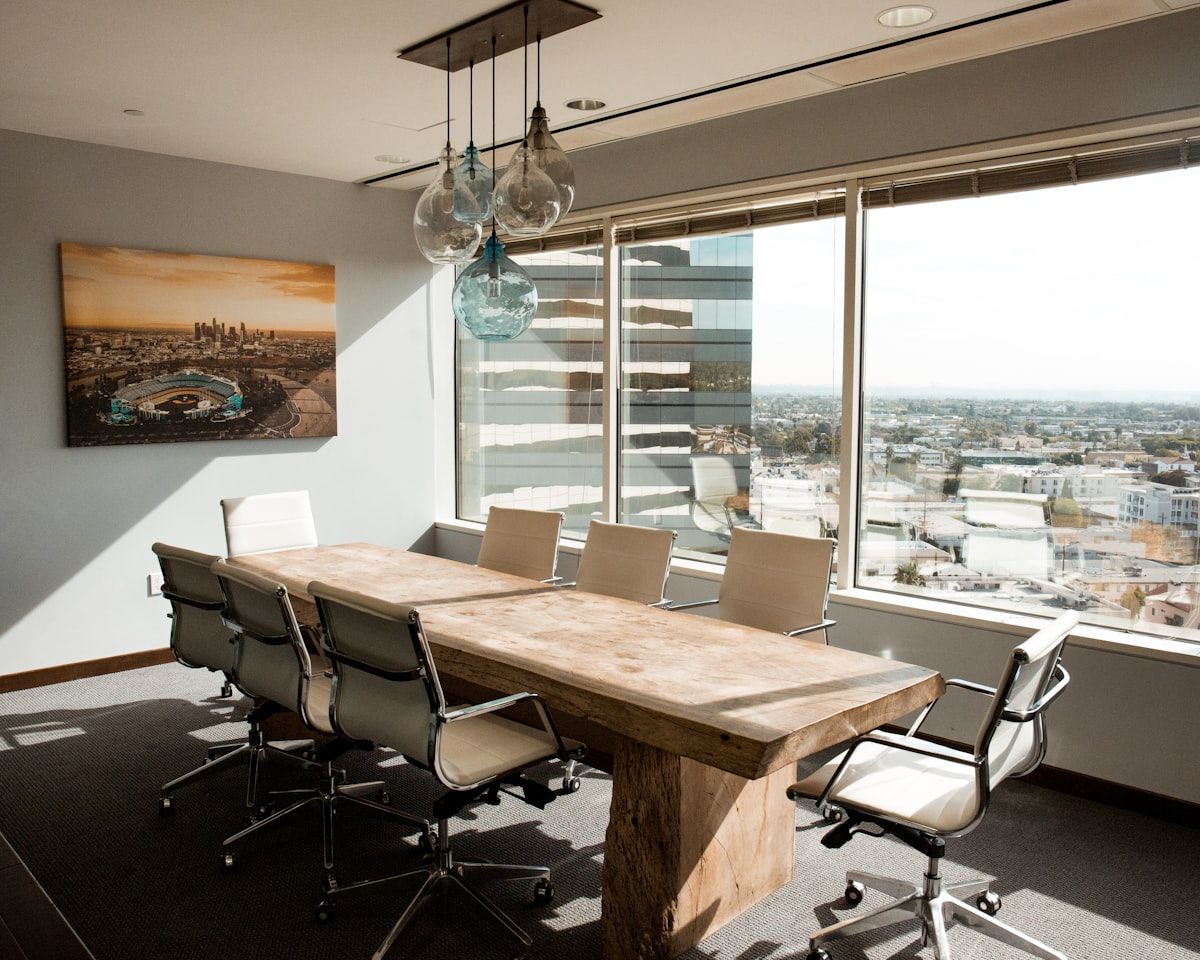
For meeting rooms, design for the camera: mount cameras at seated eye level, specify front-facing panel lights (3500-4000K) to avoid backlighting from windows, and size displays at minimum 55" for 4-person rooms and 75"+ for 8-person rooms. With 40-60% of participants dialling in remotely, meeting rooms that work badly on video are meeting rooms that nobody books.
Your 6-Step Implementation Roadmap
Here is the step-by-step methodology for delivering an office room concept, from first client meeting to handover.
Step 1: Current state analysis (Week 1-2)
- Walk the existing space — document current layout, furniture inventory, technical infrastructure
- Employee survey — what works, what does not, how many days per week they come to the office
- Occupancy data — request badge-in data or sensor data to understand actual vs. theoretical usage
- Stakeholder interviews — talk to department heads, IT, facilities, HR, and at least 5-10 regular employees
Step 2: Concept development (Week 3-5)
- Zone plan — define the four zone types and their proportions based on survey and occupancy data
- Desk ratio calculation — typically 0.6-0.8 desks per employee for hybrid models. Use the formula: occupied desks on the busiest day + 10% buffer
- Acoustic strategy — specify materials and solutions per zone, referencing DIN 18041 targets
- Biophilic integration — select appropriate elements per zone
- Technology layer — desk booking recommendation, AV specifications, sensor placement
Step 3: Design and specification (Week 5-8)
- Floor plans — colour-coded zone plan at 1:100 and 1:50 scales
- Material and furniture specification — full FF&E schedule with sourcing from European manufacturers (Vitra, USM, Sedus, Kinnarps, IKEA Business)
- Lighting plan — compliant with DIN EN 12464-1, including circadian rhythm schedule
- Budget estimate — itemised by zone type, broken down into furniture, acoustic treatment, technology, biophilic elements, and installation
Step 4: Client presentation and approval (Week 8-9)
- Present the business case first — ROI data, productivity gains, space savings
- Then the design — zone plan, material palette, 3D visualisations
- Then the budget — broken down so the client can phase the investment if needed
Step 5: Procurement and project management (Week 9-16)
- Order management — office fit-outs typically involve 20-40 suppliers across furniture, acoustics, lighting, plants, technology, and construction
- Delivery coordination — stagger deliveries to avoid warehouse chaos on-site
- Installation supervision — you designed it, so be present during critical installation phases
Step 6: Post-occupancy review (Month 6-12)
- Revisit the space after 6 months of use
- Review sensor data — compare actual occupancy to your design assumptions
- Adjust zones — maybe the focus zone needs to be larger, or a meeting room should become two smaller pods
- Invoice for the review — this is a separate engagement, typically EUR 2,000-5,000
Costs and ROI: What to Quote for Office Room Concepts
Pricing office room concepts is one of the most common questions from designers entering commercial work. Here is a realistic breakdown for European markets.
Concept fee ranges
- Small office (up to 200 sqm): EUR 8,000-15,000 for a complete room concept
- Medium office (200-500 sqm): EUR 15,000-30,000
- Large office (500-1,000 sqm): EUR 30,000-50,000
- Enterprise (1,000+ sqm): EUR 50,000+ — often negotiated as a percentage of total fit-out budget (8-15%)
These fees cover the full scope from Step 1 to Step 4. Procurement management (Step 5) and post-occupancy review (Step 6) are quoted separately.
How to justify your fee
For a 500 sqm office with 100 employees:
- Space savings from desk sharing: If you reduce the desk count from 100 to 70, the client saves approximately 60 sqm. At EUR 25-40/sqm/month (Munich, Frankfurt, Berlin rates), that is EUR 18,000-28,800 per year in rent savings alone
- Your concept fee of EUR 25,000 pays for itself in the first year — and the savings recur every year after
- Add productivity gains and reduced turnover and the ROI becomes overwhelming
Present this calculation in your proposal. Decision-makers who see a 12-month payback on your fee are far less likely to negotiate your price down.
Profit margins on procurement
If you manage procurement (Step 5), you can apply a 15-25% markup on furniture and materials sourced through your trade accounts. On a EUR 200,000 fit-out budget, that is EUR 30,000-50,000 in additional revenue on top of your concept fee.
This is where commercial office projects become significantly more profitable than residential. A single office project can generate EUR 50,000-80,000 in combined concept fees and procurement margins — the equivalent of 3-5 mid-range residential projects.
Key Takeaways
- Hybrid office room concepts are the fastest-growing commercial opportunity for European interior designers in 2026, with concept fees of EUR 15,000-50,000 for 200-1,000 sqm spaces
- The hybrid model (Model 3) is what 70% of clients need — combining fixed team neighbourhoods with flexible shared zones at a 0.6-0.8 desk-per-employee ratio
- Zone planning with four distinct areas (focus, collaboration, social, regeneration) is the core methodology — each zone has specific acoustic, lighting, and material requirements
- Acoustics are your technical differentiator — reference DIN 18041 and ASR 3.7 standards to demonstrate expertise that furniture sellers cannot match
- Biophilic design has a 3-6 month payback — present it as a productivity investment with EUR numbers, not as decoration
- The 6-step roadmap (analysis, concept, specification, presentation, procurement, post-occupancy review) structures your project and creates multiple revenue touchpoints
- Always lead with the business case — space savings, productivity gains, and reduced turnover are the language that gets budgets approved
Ready to manage your next office fit-out with 20+ suppliers, multiple delivery phases, and margin tracking on every product? ArcOps is the European-first project management platform built for exactly this. [Get early access — it is free to start.](https://arcops.studio)
Frequently Asked Questions
How much does an office room concept cost in 2026?
Office room concept fees range from EUR 8,000 for small offices (up to 200 sqm) to EUR 50,000+ for large spaces (500-1,000 sqm). The fee typically covers current state analysis, concept development, design specification, and client presentation. Procurement management and post-occupancy reviews are quoted separately and can add 30-50% to the total project value.
What is the difference between Activity-Based Working and a hybrid office model?
Activity-Based Working (ABW) eliminates all assigned desks — employees choose their workspace based on their current task (focus pod, meeting room, lounge). A hybrid model keeps team neighbourhoods with some fixed desks but adds flexible shared zones. In 2026, most European companies prefer the hybrid model because it balances employee preference for a "home base" with the space efficiency of shared zones.
What acoustic standards should I reference in an office room concept?
The key standards for European office design are DIN 18041 (room acoustic quality, targeting 0.5-0.8 second reverberation time), ASR 3.7 (German workplace noise regulations, maximum 55 dB for mentally demanding tasks), and DIN EN 12464-1 for lighting. Referencing these standards in your concept elevates your proposal above competitors who only specify furniture.
How do I calculate the right desk-to-employee ratio?
Analyse badge-in or occupancy data for the busiest day of the week (typically Tuesday or Wednesday). Count peak simultaneous desk usage, add a 10% buffer, and divide by total employees. Most hybrid offices in 2026 land at a ratio of 0.6-0.8 desks per employee. For a company with 100 hybrid workers, that means specifying 60-80 desks rather than 100.
Can residential interior designers take on office room concept projects?
Absolutely — and many successfully do. The spatial design skills transfer directly. The learning curve involves understanding commercial acoustic standards (DIN 18041), workplace lighting regulations (DIN EN 12464-1), and commercial procurement (higher volumes, trade accounts, installation coordination). Start with a small office project (50-200 sqm) to build your portfolio and references before pitching to larger organisations.